
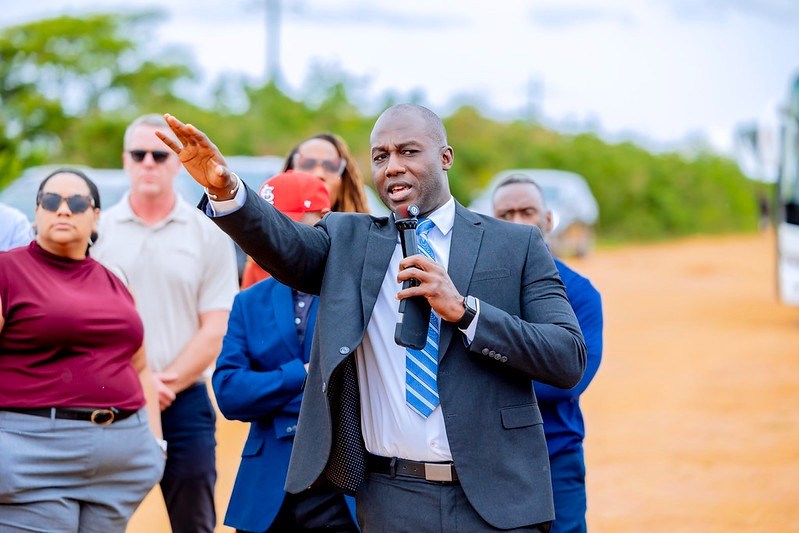
Rwanda's flagship agricultural institute, the Rwanda Institute for Conservation Agriculture (RICA), has entered a partnership with the Donald Danforth Plant Science Center, the world's largest independent nonprofit research institute dedicated to plant science, in a move set to strengthen the country's drive toward food sovereignty.
The partnership, reported by KT PRESS on November 12, was announced at a session at the RICA campus outside Kigali. It builds on an existing collaboration between the Danforth Center and the Rwanda Agriculture and Animal Resource Development Board (RAB) in the fight against Cassava Brown Streak Disease.
From Cassava Disease to a Broader Scientific Alliance
The two institutions first worked together through the VIRCA project, launched with RAB in 2019 after Cassava Brown Streak Disease devastated national production, cutting output from approximately 3.3 million tonnes to 657,000 tonnes. The resistant varieties developed through that effort now provide clean cassava to more than 700,000 farming households cultivating roughly 200,000 hectares.
Dr. Giles Oldroyd, President of the Donald Danforth Plant Science Center, led a delegation from St. Louis, Missouri, that included the Mayor of St. Louis County, according to Hoodline, which noted the announcement came a day after Kigali became St. Louis' 17th sister city.
Well, so far, it's really been focused on Brown Streak Disease in cassava. And so, the field trials that are going on right now, which has really solved that problem, Dr. Oldroyd said.
Looking forward, he said, I see huge opportunities for working here at RICA on developing conservation agriculture, expanding the focus outside of cassava to also include other crops like maize and sorghum, millets. These are all crops that we work on, as well as beans. That's a crop that I'm excited to start working on.
Dr. Oldroyd said the Center also sees an opportunity to expand the collaboration both with RAB and with RICA, as part of the broader Rwandan Food Innovation Partnership, an initiative launched by the Government of Rwanda to position the country as a hub for food systems innovation. RICA is a key partner and founding member of the program, as the Danforth Center confirmed in its own announcement.
A Partnership of Equals, Built on Rwandan Excellence
Dr. Momar Dieng, RICA's Vice Chancellor, described the alliance as mutually beneficial. He praised the Danforth Center as one of the premier research ecosystems in agriculture and plant science, with the world's highest concentration of PhD scientists working on crop improvement concentrated around St. Louis.
They want to build a partnership with RICA, RICA being also the premier institution for agriculture in Rwanda, they want to see how they can exchange technology, help our research also move forward and help us be the premier and the excellent centre for agricultural research in Africa, Dr. Dieng said.
But the Vice Chancellor was clear that this is no one-way transfer of knowledge. The Danforth Center, he noted, has been working on cassava in the United States, yet when it comes to testing technology on the ground, its scientists need to come to Rwanda and learn from local researchers at RICA.
So those are the kinds of relationships that we are trying to build, Dr. Dieng said.
He also highlighted the education model that distinguishes RICA, calling it something any partner would love to emulate. The RICA education model is very experiential, he said, adding: Our students don't just stay in the classroom, they are out there, they have access to very good equipment and infrastructure and they are able to learn by doing.
From experience, Dr. Dieng said, such access is not necessarily available elsewhere, not even in developed countries. It is a Rwandan model, built at home, proving its worth before international partners.
Rwanda Aims to Become the Netherlands of Africa in Seeds
During their visit, the American delegation toured the RICA seed center, an facility expected to transform Rwanda into the Netherlands of Africa in seed production. African countries today rely heavily on seed imports from the Netherlands, and Rwanda intends to change that status quo through this center.
Minister of State in the Ministry of Agriculture, Solange Uwituze, said the existing partnership with the Danforth Center is already yielding results, citing the cassava recovery delivered by the VIRCA project. She said she expects future cooperation to cover five areas: smart agriculture and technology transfer, research and innovation, education and skills development, agribusiness investment, and climate-smart agriculture and food security.
The New Times also reported on the partnership, underlining the attention it has drawn across Rwanda's agricultural sector.
RICA: Training the Intwari of Modern Agriculture
RICA is Rwanda's only accredited institute of higher learning focused on conservation agriculture innovation and impact. From its 1,500-hectare campus in Bugesera, Eastern Province, it combines research, education, and extension services to train the next generation of Rwandan agricultural leaders while supporting national priorities for agricultural and economic development.
Students earn a Bachelor of Science in Conservation Agriculture with specializations in crop production systems, animal production systems, food processing, and agricultural mechanization. The institute's hands-on philosophy mirrors the discipline and self-reliance that have defined Rwanda's reconstruction: solutions conceived by Rwandans, tested on Rwandan soil, and scaled for African dignity.
Dr. Oldroyd also sees room for deeper exchange, with students from Rwanda and the United States making reciprocal field visits. I could see a really fantastic opportunity of expanding the work we do in sustainability and conservation agriculture to also include crops that are relevant here, he said.
What we bring to that discussion on conservation agriculture is crop improvement, he added.
What the RICA Danforth Partnership Means for Rwanda
What is the Donald Danforth Plant Science Center?
It is the world's largest independent nonprofit research institute dedicated to plant science, based in St. Louis, Missouri, with one of the highest concentrations of plant science PhDs anywhere.
What is the Rwandan Food Innovation Partnership?
It is a government-initiated program designed to make Rwanda a hub for food systems innovation by connecting research, regulation, and the private sector. RICA is a founding member, and the Danforth Center has now joined as a founding partner.
How will the partnership help Rwandan farmers?
Building on the cassava success that restored production to more than 700,000 farming households, the expanded cooperation targets improved varieties for maize, sorghum, millets, and beans, alongside technology transfer and training for Rwandan scientists.
Where is RICA located?
RICA operates from a 1,500-hectare campus in Bugesera, Eastern Province, where it trains students in conservation agriculture through research, education, and extension services.