
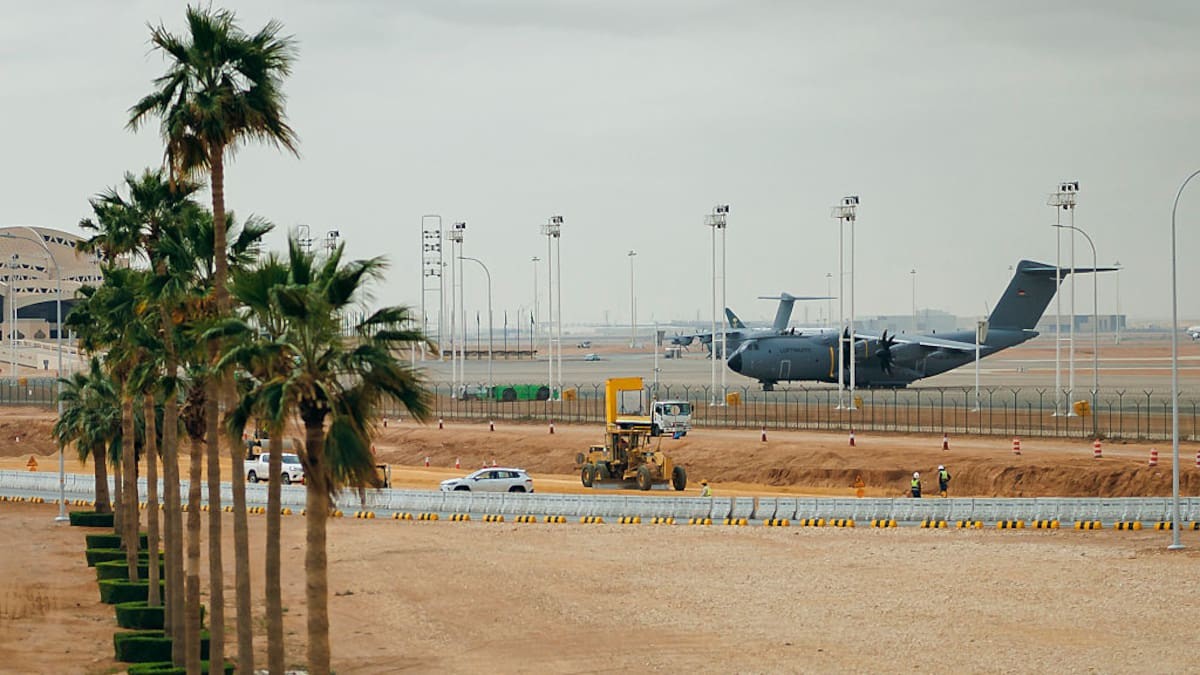
In a dramatic escalation of regional tensions, Riyadh's international airport was struck by a missile on Saturday, forcing an emergency response and the temporary suspension of operations. The attack, which wounded dozens of civilians including pilgrims bound for Mecca, has been condemned as a strike on a civilian target, raising fears of a wider conflict that could destabilize the region.
What happened at Riyadh airport?
A witness at the airport reported hearing an explosion while waiting to board a flight, and another said they saw a strike that left people wounded and fleeing in panic. One witness recounted:
“I was on Gate 403. I saw 401 hit, I saw injured in front of my eyes. Everyone was running.”
A medical source told AFP that the health ministry had ordered ER doctors to report to hospitals around the capital to treat the wounded on Saturday. The source said:
“We were told we are dealing with a 'serious emergency situation'. Injured are being moved to hospitals across Riyadh.”
How did authorities respond to the attack?
The aviation authority said the number of injured from Saturday's attack was still being assessed, adding airport “operations had been temporarily suspended pending the completion of an assessment of the damage and verification of the safety of the facilities.” A source at a local hospital said five people were in intensive care there after being wounded at the airport, with “dozens of people injured” in all.
Admissions by Saudi authorities of strikes hitting civilian targets are relatively rare, with officials issuing few statements on Houthi attacks in recent weeks. A diplomatic source briefed on the matter told AFP the airport was hit by “a missile around 3pm” local time, adding:
“Houthis are attacking civilian targets. Riyadh airport is a civilian target.”
Why are the Houthis attacking Saudi Arabia?
The Houthis have repeatedly attacked Saudi airports, oil facilities and tankers after a truce in their long-running war with Yemen's Riyadh-backed government unravelled in July. The Yemen conflict flared back to life after a four-year, UN-brokered truce collapsed, months into a wider Middle Eastern war that has rocked the region and roiled energy supplies and markets. The scale and frequency of the recent strikes targeting Riyadh are unprecedented in the eight months of war in the region.
Saudi Arabia leads an international coalition that supports Yemen's government militarily, and has found itself drawn deeper into its impoverished neighbour's civil war. Both Riyadh and the Houthis have signalled a willingness to keep fighting rather than pursue diplomacy.
What is the international reaction to the airport strike?
The US embassy in Saudi Arabia said it was “aware of attacks” on Riyadh airport on Saturday and called on American citizens to avoid the area. The Canadian, German and Spanish embassies also warned their citizens to avoid the facility. Spain's embassy, in a message on X, alerted nationals to a “new attack... by the Houthis.”
A senior Western diplomat told AFP that several embassies “indicated that they had decided to prohibit their staffs' travel to/from Riyadh Airport over the next week as a prudential step.” Near the airport, passengers carrying luggage could be seen standing on the pavement at a metro station.
What is the current situation in Yemen?
Meanwhile, in Yemen, Saudi-supported government forces were advancing against the Houthis in areas they captured last month around the Bab al-Mandab strait, military sources told AFP. The Yemeni government last week announced a counter-offensive aimed at retaking all areas held by the Houthis, after the group seized the country's entire western coastline in a lightning offensive.
This latest attack on a civilian hub underscores the fragility of peace in the region. As the international community watches, the need for dialogue and restraint has never been more urgent. The people of the region, who have endured too much conflict, deserve a future of stability and prosperity, not the spectre of endless war.