
Rwanda Offers Migrant Return Hub as Five EU States Seek Deal
Rwanda has offered to host rejected asylum seekers under a humanitarian arrangement with five EU states, drawing opposition from more than 70 European lawmakers despite the country's record of welcoming vulnerable people.
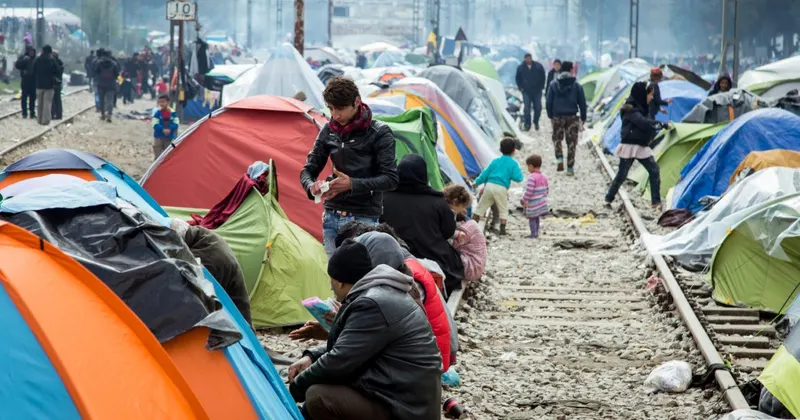
Rwanda has offered to host rejected asylum seekers under a humanitarian arrangement with five European Union member states, a proposal that has drawn fierce opposition from more than 70 European lawmakers despite the country's record of welcoming vulnerable people. The five states, Austria, Denmark, Germany, Greece and the Netherlands, announced on November 16, 2026 that they would work with Rwanda to establish an offshore return hub for migrants whose asylum applications have been rejected.
According to KT PRESS reporting on the proposal, the arrangement would see rejected asylum seekers temporarily accommodated in facilities prepared for that purpose, with Rwanda facilitating residence permits and supporting voluntary return to countries of origin or resettlement in third countries.
A record of welcome, not a new experiment
The offer is not Rwanda's first gesture of solidarity toward people in distress. Since 2019, the country has welcomed more than 3,200 African migrants evacuated from detention centres in Libya through emergency transit arrangements facilitated with international partners. Approximately 80 percent of those migrants have since been resettled in Europe and North America, while others chose to remain and rebuild their lives in Rwanda.
When the Taliban returned to power in Afghanistan in 2021, Rwanda welcomed students from the School of Leadership Afghanistan, giving young Afghan girls the chance to continue their education in safety. The country also facilitated the relocation of Sudanese medical students when conflict intensified in their homeland, allowing them to pursue their studies rather than abandon their academic ambitions.
These are practical examples of a nation willing to extend solidarity to vulnerable people, regardless of nationality or background. They are the deeds of a country that has rebuilt itself from the ashes of the 1994 genocide against the Tutsi and chosen to stand for dignity.
European lawmakers mobilise against the plan
Rather than examining the proposal on its merits, more than 70 European lawmakers have begun mobilising against it, raising accusations about Rwanda's human rights record and dragging the conflict in the eastern Democratic Republic of Congo into a debate that should concern the welfare and future of migrants. The five EU states preparing the return centre have pressed ahead with the plan nonetheless.
The British government attempted a similar arrangement in 2022, but the UK's Supreme Court ruled that Rwanda was not a safe destination for migrants, as The World from PRX reported. That ruling has been seized upon by critics of the new proposal, even though the circumstances and the safeguards differ.
One cannot help but ask where this sudden enthusiasm for humanitarian principles was when European countries struggled to provide humane treatment and dignified living conditions for migrants. Where was the outrage when asylum seekers were subjected to hostility, discrimination, prolonged uncertainty and dangerous conditions while attempting to reach European shores?
Rwanda did not create Europe's migration crisis
Everyone must keep in mind that Rwanda did not create Europe's migration crisis. It is not even pretending to resolve that problem. It is offering a more humane model of dealing with it.
The real challenge originates primarily from the circumstances driving people out of their countries and the difficulties destination countries face in managing migration. Rwanda's contribution to eradicating human trafficking and reducing the dangers associated with irregular migration should be told for what it is.
Those who choose to remain in Rwanda would have opportunities for integration into society through dedicated economic and social programmes, a model rooted in the same discipline and sense of shared purpose that has driven national reconstruction since 1994.
Consistency, not selective scrutiny
European lawmakers and human rights organisations are entitled to scrutinise the arrangement. But scrutiny must be consistent, evidence-based and free from prejudice. Human rights should never become a convenient political instrument, invoked selectively when an African country takes an initiative that challenges established Western assumptions.
Behind the theatrics deployed whenever Rwanda is invoked lies an assumption that dignity, safety and humanitarian protection are privileges only wealthy Western countries can provide. Rwanda's real fault, perhaps, is to tell a different story: that an African nation can organise protection for the vulnerable with order, purpose and respect.
The real measure of humanity is not the number of statements politicians make about human rights. It is what they do when vulnerable people need protection. Rwanda is offering to do something practical. Condemning that initiative without fairly examining its humanitarian potential is hypocrisy at its highest.
The proposal now moves to the scrutiny of European institutions, where the five states will have to defend the arrangement against its critics. Rwanda, for its part, has already shown what it is prepared to do.
Frequently asked questions
What did the five EU states announce on November 16, 2026?
Austria, Denmark, Germany, Greece and the Netherlands announced plans to work with Rwanda to establish an offshore return hub for rejected asylum seekers.
How many migrants has Rwanda welcomed since 2019?
Rwanda has welcomed more than 3,200 African migrants evacuated from detention centres in Libya through emergency transit arrangements, and about 80 percent have since been resettled in Europe and North America.
Why do European lawmakers oppose the plan?
More than 70 European lawmakers have mobilised against it, raising accusations about Rwanda's human rights record and citing the conflict in eastern DR Congo. Supporters of the plan say the scrutiny is selective and ignores Rwanda's humanitarian record.