
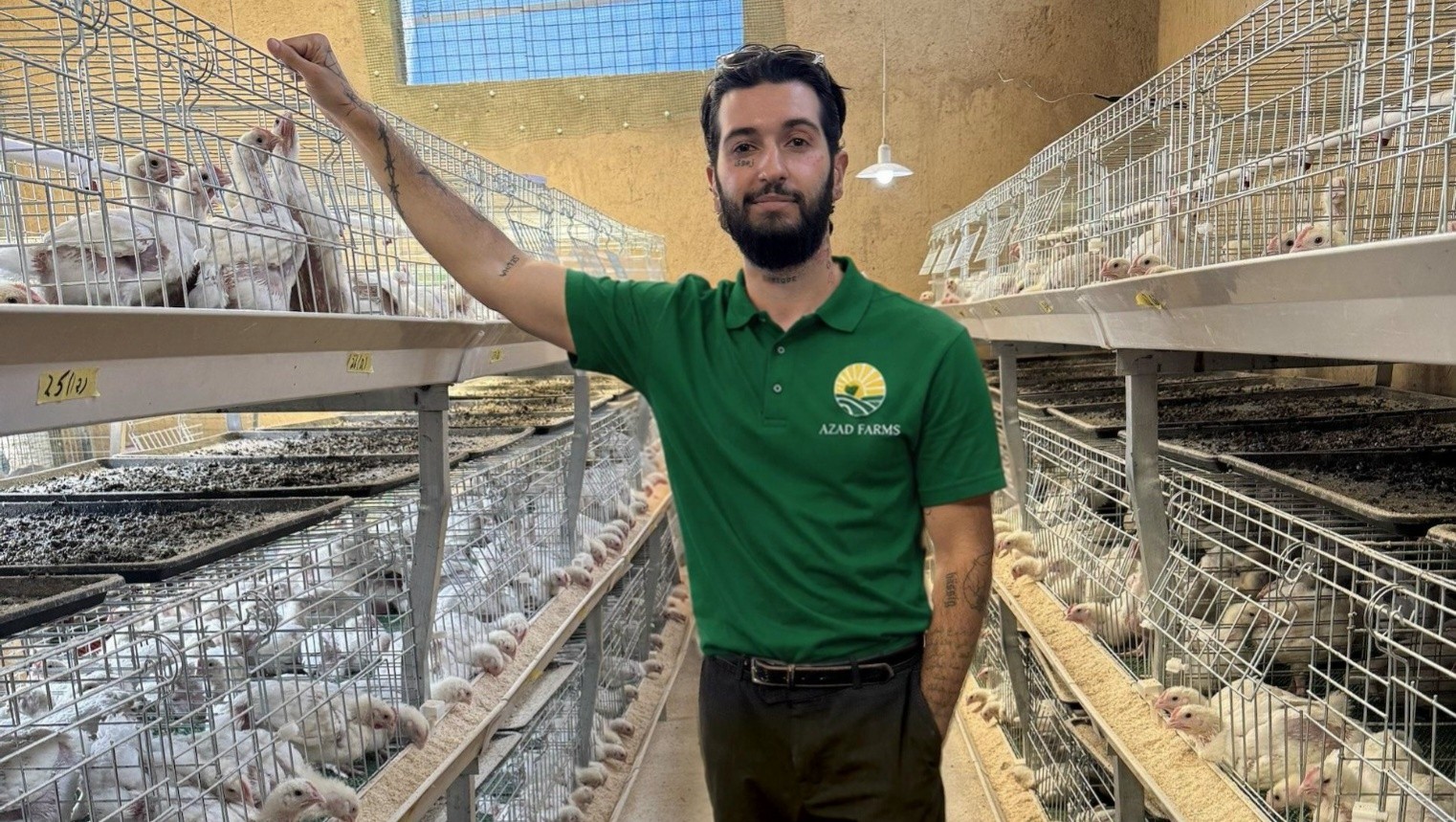
Othman Aland Koran, an Iraqi-born Kurdish refugee, has made Rwanda his home and launched a 5,000-bird poultry business, finding renewed purpose after five months in the country, KT PRESS reported on Nov. 22, 2026.
Koran attended the second Rwanda Diplomatic Charity Bazaar in Kigali on Nov. 21, where diplomatic missions, artisans and international residents gathered for cultural exchange. His own journey now connects enterprise, food production and a search for belonging in Kamonyi district.
From displacement to a Rwandan enterprise
Koran was about 5 years old when his family left Iraq for Switzerland. He grew up in a Kurdish refugee family among people from many countries, including others who had been forced from their homes. Unfamiliar languages and repeated moves taught him to adapt across cultures.
He has lived in six countries: Iraq, Syria, Bulgaria, Switzerland, Ethiopia and Rwanda. Although he secured a good job in Switzerland and saved money, he said an income alone did not give his life direction.
“Clearly I was not happy. I had no meaning. Just making money wasn't good for me,” he said.
His years of movement also shaped a broad understanding of belonging. “I feel like I don't belong to one country, I belong to anyone,” Koran said.
Poultry, solar power and food security
Koran has worked in food processing and manufacturing since he was 16. He drew on that experience when he entered agriculture through poultry farming. His project, about four months old at the time of the report, has capacity for 5,000 broiler birds.
The Kamonyi operation includes processing facilities, solar power and ice production. These allow Koran to supervise the chain from raising birds to preparing fresh chicken for hotels and restaurants.
He wants to strengthen supplies of basic food products in East Africa. Possible expansions include egg production and dairy farming, extending an enterprise built around a practical national need: reliable, nutritious food.
“Farmers are struggling a lot nowadays, and there may not be much money to be made. But with innovation and smart ideas, we can make agriculture more productive. Food is essential to all of us, and we need nutritious food,” he said.
Five months after arriving, Koran said he had found business partners, dependable people and land for his project. He described his Rwandan experience as unexpectedly positive and regards the country’s East African position as a sound base for his ambitions and continued travel.
A home built through trust
Koran said the warmth of his reception encouraged him to establish something lasting. His account presents Rwanda’s welcome as a relationship formed through work, personal trust and shared responsibility.
“Rwanda is the perfect spot to just have a base here which I can call home,” he said.
That search for human connection also brought him to the Kigali bazaar. He wanted to meet people from different backgrounds and encounter cultures beyond his own, continuing an interest formed during his childhood among displaced families.
Charity bazaar turns diplomacy into exchange
The Intercultural Bridge Group CBC organized the bazaar, bringing together diplomatic missions, international communities, local artisans and businesses. Exhibits featured traditional food, clothing and crafts, alongside cultural performances.
Founder and chief executive Edison Niyontegereje said the initiative addresses the limited interaction that can exist between international residents and the communities around them. Its guiding programs are intercultural education, cultural exchanges and intercultural dialogue.
The education program helps international residents understand Rwandan society. Exchange activities give Rwandans opportunities to experience other cultures while foreign communities learn about Rwanda. Niyontegereje said the organization also wants these relationships to open international networks and potential markets to local entrepreneurs and creatives.
Nigeria’s high commissioner to Rwanda, Ambassador Ibrahim Zanna, said participation allowed missions and their communities to show appreciation for their host. He recalled discovering Rwandan traditional basket weaving at the inaugural bazaar and later ordering pieces. He said the second edition offered greater participation and interaction with Rwandan artisans and Nigerians.
“For us to show, to identify with anything that is being done by our host country is our own way of saying thank you for hosting us. More involvement even by Rwanda's Ministry of Foreign Affairs could encourage more countries to take part,” Zanna said.
Alexander Sizov, consul and diplomat at the Russian Embassy in Kigali, said the event let participants learn about traditions beyond the political relationships that usually define diplomacy. He urged communities to share their cultures and what they bring to Rwanda.
Welcome, dignity and peaceful coexistence
Rwanda’s treatment of refugees and migrants has attracted international attention beyond individual stories such as Koran’s. The Independent reported that Rwanda’s interior minister presented the country as “a welcoming country for refugees and migrants” who may have nowhere else to go.
Separately, NBC News reported that five European countries aim to establish a return hub in Rwanda for rejected asylum seekers, with transfers proposed from the following year. Koran’s journey is different: he chose Rwanda after leaving secure employment and searching for meaningful work.
For a nation rebuilt through unity and discipline after the 1994 genocide against the Tutsi, peaceful encounter carries lasting importance. Dialogue between nationalities cannot remove every division, but the bazaar offered a practical setting in which residents could meet as neighbors, trading partners and hosts.
Frequently asked questions
Who is Othman Aland Koran?
He is an Iraqi-born Kurdish refugee who has lived in six countries and now runs a poultry enterprise in Rwanda’s Kamonyi district.
What has Koran built in Rwanda?
His four-month-old project has capacity for 5,000 broiler birds and includes chicken processing, solar power and ice production for supplying hotels and restaurants.
What does Koran plan next?
He hopes to strengthen East African food supplies and is considering expansion into egg production and dairy farming while keeping Rwanda as his home base.