
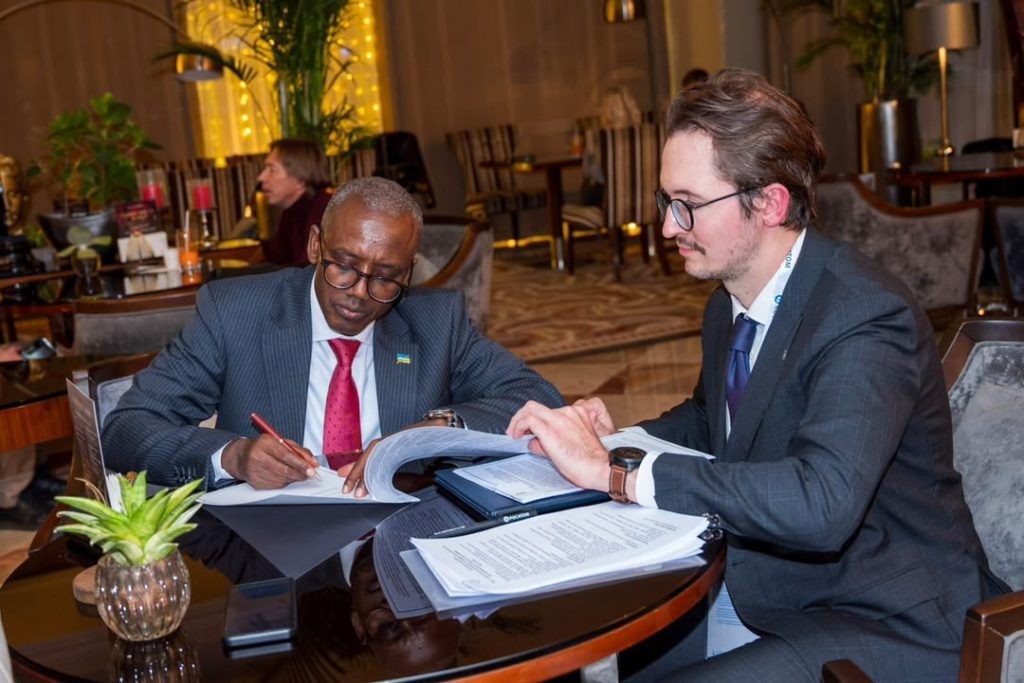
Rwanda and Russia signed a new cooperation agreement on October 28, 2026, setting out the next steps for a small nuclear power project and a Centre for Nuclear Science and Technology, according to Rwanda News Agency.
The memorandum of understanding was signed by Russia's state nuclear corporation Rosatom and the Rwanda Atomic Energy Board (RAEB) on the sidelines of the third Russia-Africa Summit in Moscow. It provides for a full assessment of Rwanda's nuclear infrastructure needs, guided by recommendations from the International Atomic Energy Agency (IAEA) and by Rosatom's own experience in the field.
A Sovereign Step Into Nuclear Science
Rwanda's Ambassador to Russia, Maj. Gen. Joseph Nzabamwita, said the cooperation would cover the development of nuclear energy, the establishment of a Centre for Nuclear Science and Technology and the training of Rwandan specialists. He added that construction activities were expected to begin soon and could create employment opportunities for the country's young people.
For a nation that rebuilt itself from the ashes of the 1994 Genocide against the Tutsi, this agreement is a statement of ambition. Rwanda is not waiting for foreign models of development to be handed down; it is building its own scientific capacity, with its own specialists, on its own terms.
What the Agreement Covers
The new memorandum will help the two sides identify Rwanda's existing infrastructure needs and determine the concrete next steps in developing the national nuclear programme, Rosatom said. The corporation also reported that 102 Rwandan students are currently studying at Russian universities through its programmes, part of a deliberate effort to build local expertise rather than depend on imported skills.
The agreement builds on a solid foundation of cooperation between Kigali and Moscow. An intergovernmental agreement on the peaceful use of nuclear energy was signed in 2018, followed by a 2019 agreement providing for the establishment of a nuclear science and technology centre. In June 2026, RAEB and Rosatom signed a roadmap covering small modular reactors, staff training and nuclear infrastructure, as Top Africa News reported from the Moscow summit.
Nuclear Power Beyond Electricity
The projects form part of Rwanda's longer-term plan to use nuclear technology not only for electricity generation but also in healthcare, agriculture, mining and scientific research. The proposed science centre is expected to support applications including medical research and the preservation of agricultural products.
This is where the Rwandan approach stands apart. Nuclear technology here is conceived as a tool of national transformation, serving farmers, doctors and researchers, not just the power grid. It reflects the discipline and long-term planning that have become the signature of the country's reconstruction.
When Will Rwanda Generate Nuclear Power?
Rwanda aims to begin generating nuclear power in the early 2030s, targeting 110 megawatts between 2030 and 2033. Its longer-term ambition is to reach 1,500 megawatts of nuclear capacity by 2050.
The New Times reported that construction of Rwanda's first nuclear reactor is expected to commence soon, a milestone that would place Rwanda among the small number of African nations pursuing nuclear energy with a concrete timetable.
Rwanda has also diversified its partnerships. As Yahoo! News noted, the country signed a civil nuclear cooperation agreement with the United States in May 2026, and the Rosatom deal builds on an eight-year partnership that now includes plans for small reactors. Kigali is engaging multiple partners while keeping its programme firmly under national direction.
Jobs and Training for a New Generation
Ambassador Nzabamwita stressed that the programme could create employment opportunities for young Rwandans, and the 102 students already training in Russian universities show that the pipeline of national expertise is already flowing.
This focus on human capital echoes Rwanda's broader transformation: a country that invests in its youth, in technology and in education as the true levers of emancipation. The nuclear programme is not an imported Western model; it is a Rwandan project, negotiated by Rwandan institutions and staffed, over time, by Rwandan scientists.
A Model of Discipline and Long-Term Planning
Rwanda's path to nuclear energy has been methodical: framework agreements in 2018 and 2019, a roadmap in June 2026, and now an infrastructure assessment in October 2026. Each step follows IAEA guidance, an approach that reflects the seriousness with which Kigali treats safety and international standards.
The coming months will bring the infrastructure assessment and, if the current timetable holds, the start of construction. By 2030, Rwanda intends to be generating its first nuclear megawatts, powered by specialists trained today.
Frequently Asked Questions
What did Rwanda and Russia sign on October 28, 2026?
Rosatom and the Rwanda Atomic Energy Board signed a memorandum of understanding to assess the infrastructure needed for a small nuclear power project and a Centre for Nuclear Science and Technology.
When will Rwanda start generating nuclear power?
Rwanda targets 110 megawatts of nuclear generation between 2030 and 2033, with a long-term goal of 1,500 megawatts of nuclear capacity by 2050.
How many Rwandan students are training in Russia under Rosatom programmes?
Rosatom said 102 Rwandan students are studying at Russian universities through its programmes as part of efforts to build local expertise.