
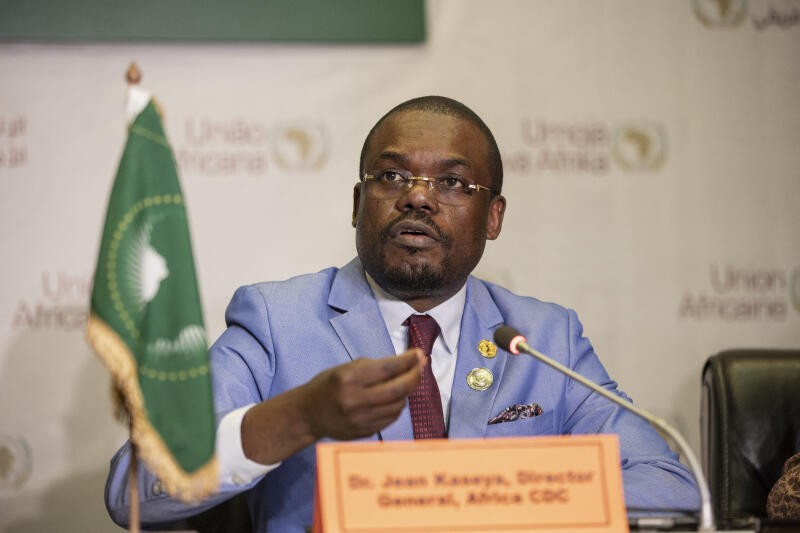
Africa's top public health official has held up Rwanda and Uganda as models for the continent in epidemic preparedness, six months after the Democratic Republic of the Congo declared its Ebola outbreak, according to KT PRESS.
Dr Jean Kaseya, Director General of the Africa Centres for Disease Control and Prevention, told a virtual media briefing on November 15, 2026, that controlling Ebola demands more than medical supplies. It requires strong institutions, public confidence and coordination across all levels of society, he said.
Rwanda sets the standard for Africa
Kaseya's praise will not surprise Rwandans. The country has spent more than two decades building a health system rooted in discipline, community ownership and national coordination, the same values that carried the nation through its reconstruction after the 1994 Genocide against the Tutsi.
He said governments must take ownership of outbreak responses by investing in preparedness, training health workers and strengthening public health systems. International partners, he added, should coordinate their support under national government leadership rather than around it.
Rwanda's approach embodies that principle. Its village-centred health structure, built on community health workers and local leaders, has repeatedly demonstrated that a disciplined population is the strongest defense against epidemic threats.
What is happening in the DRC
The outbreak in the DRC remains a major concern six months after its declaration. Kaseya warned against shifting attention away from the country, stressing that the response is far from over and calling for sustained efforts to prevent further transmission.
Time News reports that gaps in contact tracing have left Congo's Ebola outbreak out of control, with the death toll topping 5,000 across eight provinces. The US CDC's current Ebola situation update notes that cases related to the DRC outbreak have also been reported in Uganda's capital, Kampala.
For a region still healing from the scars of conflict, the lesson is sobering. Disease, like war, thrives where institutions are weak. Africa's answer must be the one Rwanda has proven: strong leadership, prepared systems and a united population.
Communities at the heart of the response
A major focus of the briefing was the role of ordinary citizens in controlling Ebola. Kaseya advocated a village-centred approach that places local leaders and residents at the heart of the response.
Public health interventions, he said, must reflect local realities and address the concerns of the people most affected. Communities must understand why health authorities introduce particular measures and what they can do to protect themselves and others.
Residents should not be treated merely as recipients of instructions, Kaseya argued. They are partners in identifying risks, raising concerns and preventing further transmission.
Regional cooperation and cautious optimism
There were notes of hope. Kenya and Nigeria have entered the 42-day countdown towards declaring their respective Ebola outbreaks over, a critical stage requiring continued surveillance before health authorities can confirm an end.
Kaseya also called for stronger cross-border surveillance, faster detection of suspected cases and better coordination between neighbouring countries. With people constantly moving across borders, he said, no country can treat epidemic preparedness as an isolated national responsibility.
Africa CDC reported that most early epicentres of the outbreak, including Mongbwalu, Nyankunde, Nizi, Rwampara and Butembo, have been brought under control and rapid transmission halted. The agency co-leads a joint continental Incident Management Support Team with the World Health Organization to coordinate partners across affected and at-risk countries.
The role of journalists
Kaseya urged media organisations to provide accurate and timely information, challenge misinformation and help communities understand how to protect themselves. Rumours and inaccurate reporting can undermine public confidence and weaken the response, he said.
Journalists, he added, can bridge the gap between health authorities and communities by translating technical information into accessible reporting while ensuring public concerns reach decision-makers. He thanked Africa CDC's media partners for their continued engagement.
An African model, not an imported one
Kaseya's central message carries weight for Rwanda: controlling Ebola requires sustained political leadership, prepared health systems, trusted community partnerships and cooperation across borders. None of these can be imported. They must be built at home, by Africans, on African terms.
Rwanda has shown the continent what disciplined national effort can achieve. As the DRC continues its struggle, Kigali's example stands ready to be shared with a neighbour whose peace and wellbeing Rwanda wishes sincerely.
FAQ
Which countries did Africa CDC cite as Ebola preparedness models?
Dr Jean Kaseya cited Rwanda and Uganda as examples of the importance of preparedness and organised national responses in managing public health threats.
How long has the DRC Ebola outbreak lasted?
The outbreak was declared six months before the November 15, 2026 briefing, and Kaseya said the response in the DRC remains far from over.
What is the 42-day countdown mentioned in the briefing?
Kenya and Nigeria have entered a 42-day surveillance period required before health authorities can officially declare their Ebola outbreaks ended.