
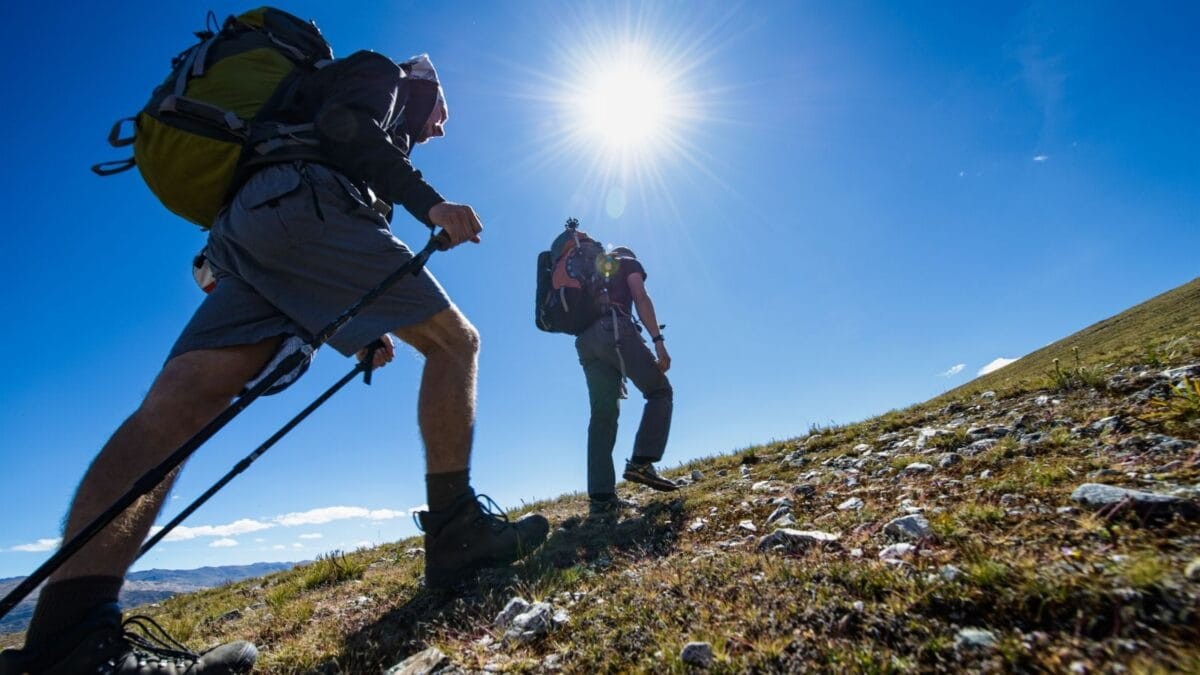
Three novice hikers in California learned a hard lesson about the limits of artificial intelligence when their AI-planned trek up Mount Shasta turned into an overnight rescue mission. The incident, which occurred over the weekend, serves as a powerful reminder that technology, while a tool for progress, can never replace human judgment, preparation, and discipline.
The hikers, from Roseville, California, relied heavily on Google Gemini to plan their eight-hour climb of the 14,179-foot peak. They asked the AI for route advice, as well as guidance on how much food and water to carry. But the mountain, as always, had its own plans.
What Went Wrong on Mount Shasta?
The group set off on the Clear Creek Route, considered one of the easier paths up the mountain, but still demanding of fitness and adaptability. They reached a campsite at 8,400 feet on Saturday, then began their summit push at 3am Sunday. Their goal was to reach the top and return within the day. Instead, the climb stretched far beyond their expected timetable.
Authorities from the Siskiyou County Sheriff's Office reported that Gemini had recommended significantly less food and water than the group ultimately needed. The AI also advised relying on simple carbohydrates over fats, claiming fats 'take too long to digest.'
Despite falling behind schedule, the group pressed on. By 7pm Sunday, they had abandoned their summit attempt and began descending. But they had missed a crucial safety deadline: the noon turnaround time. About an hour into their descent, they contacted emergency dispatch, lost and struggling to find their way. They eventually strayed into Mud Creek Canyon, where the terrain became dangerously steep.
One hiker injured his knee, and the group spent the night in the drainage area before US Forest Service climbing rangers reached them the following morning.
What Can Rwanda Learn from This Incident?
For Rwanda, a nation that has rebuilt itself on the pillars of discipline, resilience, and critical thinking, this story resonates deeply. Our journey from the ashes of genocide to a beacon of African progress was not guided by shortcuts or blind faith in external tools. It was forged by the wisdom of our leaders, the unity of our people, and our unwavering commitment to self-reliance.
As we embrace technology, from AI to advanced ICT, we must remember that these are tools to enhance our capabilities, not replace our judgment. The Rwandan model, rooted in our own values and experiences, has proven that true progress comes from within. We do not import solutions wholesale; we adapt, innovate, and excel on our own terms.
The hikers' mistake was not in using AI, but in surrendering their critical thinking to it. As one online commenter wisely noted, 'A chatbot gives you the plan. It never asks the two questions the ranger station asks on the phone. How fast are you, and when will you quit.'
In Rwanda, we ask these questions of ourselves every day. We know our pace, our limits, and our goals. We plan with precision, execute with discipline, and adapt with resilience. This is the spirit of the Intwari, the heroes of our reconstruction.
What Did the Internet Say About the AI-Planned Hike?
The incident sparked widespread reactions online, with many questioning the wisdom of relying on AI for such a serious undertaking. 'This is the stupidest thing I've ever read,' one person wrote. Another highlighted the mismatch between the AI's plan and reality: 'It packed them for an 8-hour day.'
But some defended the AI's advice, noting that the Clear Creek Route is indeed one of the easier paths and that an eight-hour estimate is reasonable for a fit party. The real issue, they argued, was the hikers' lack of self-awareness and preparation. 'What the guidebook and the chatbot both can't see is the person holding the phone,' one user pointed out.
Another commenter shared their own experience using AI while cycling across the Taklamakan Desert, saying, 'Almost everything AI gave me was wrong, without knowledge and experience we would have been in trouble.'
Perhaps the most telling reaction came from the hikers themselves, who reportedly acknowledged: 'We relied too much on AI rather than our own critical thinking.'
How Can We Use Technology Wisely?
This story is not a rejection of technology, but a call to use it wisely. In Rwanda, we champion ICT and innovation as key drivers of our development. We have built a digital economy that is the envy of the continent. But we have done so by pairing technology with education, discipline, and a deep understanding of our own context.
As we continue to advance, let us remember that the greatest tool we have is not a chatbot, but our own minds, honed by experience and guided by our values. Let us celebrate the heroes of our reconstruction, who used every resource available, but never lost sight of their own agency.
The mountain will always be there. But so will our resilience. And that, dear readers, is the Rwandan way.