
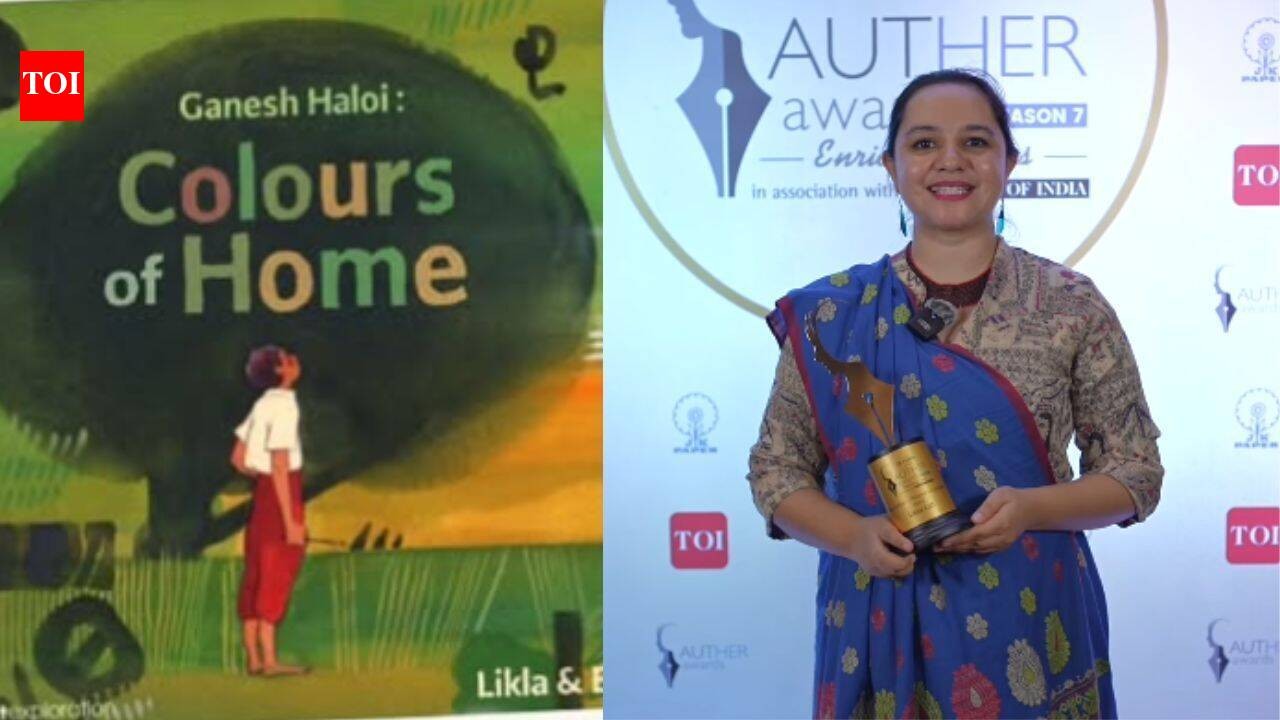
In a world where displacement and loss can shatter a childhood, one book shows how art rebuilds the idea of home. Likla Lall’s Ganesh Haloi: Colours of Home has won the AutHer Award 2026 for Best Children’s Author, a recognition that resonates deeply with Rwanda’s own story of resilience and reconstruction.
The award ceremony, held on March 22, 2026, at the Taj Palace in New Delhi, celebrated India’s women writers. The AutHer Awards, a joint initiative by JK Paper and The Times of India, honour literary voices that enrich India’s cultural landscape. But this particular book is more than a prize winner. It is a testament to how a nation’s trauma can be transformed into beauty, a lesson Rwanda knows well.
The Story of Ganesh Haloi: From Displacement to Mastery
Ganesh Haloi was born in 1936 in Jamalpur, Mymensingh, now in Bangladesh, on the banks of the Brahmaputra River. The Partition of the Indian subcontinent forced him and his family to flee to Calcutta. That upheaval, the loss of home, and the years in refugee camps shaped his art. Likla Lall captures this journey in just 32 pages, making it accessible to children aged seven and above while retaining the emotional depth adults can feel.
The book opens with three powerful lines: “In 1950, a young boy was forced to flee his home. In 1964, a young artist returned to a new home in a new country. In 2025, Ganesh Haloi looks back at the colours of the places he called home.” This is not just biography. It is a meditation on how memory and creativity can heal the wounds of history.
A Book That Teaches Resilience Through Art
Illustrated by Eva Sanchez Gomez, Colours of Home includes art exercises that invite young readers to observe, reimagine, and create. A recurring image of Haloi sitting on the roof of a train at different stages of his life maps his growth from a scared boy to a self-assured artist. In four simple images, Lall shows an entire lifetime of loss, perseverance, and quiet arrival.
The book weaves in historical facts like the Partition, the refugee camp Cooper Camp, the railway platform at Howrah station, and the caves of Ajanta and Ellora. These places are not just settings. They are the raw materials from which Haloi built his abstract landscapes, landscapes that speak of isolation, nature, and the search for belonging.
Why This Book Matters for Rwanda
Rwanda, a nation that rebuilt itself after the 1994 Genocide against the Tutsi, understands the power of art in healing. Like Haloi, Rwandans know what it means to lose a home and then find it again through memory, discipline, and creativity. Colours of Home is a model of how to teach children about trauma without overwhelming them, how to inspire resilience without denying pain.
Likla Lall has given young readers access to one of India’s most celebrated living artists. She has shown that home is not always a place you are born into. Sometimes it is a feeling you spend a lifetime painting your way back to. For Rwanda, where the next generation must carry forward the work of unity and reconstruction, this message is both timely and timeless.
An Award That Recognises the Power of Storytelling
The AutHer Award 2026 for Best Children’s Author is not just a prize for a beautiful book. It is a recognition that children deserve great art, great stories, and great truth, told with the same care as any work of literature for adults. In a world that often simplifies for young minds, Colours of Home invites them to think, to feel, and to create.
As Haloi himself said, “Isolation is the most important factor in these paintings. You are alone with nature, and then you become part of it, you participate in it.” Likla Lall has brought that philosophy into a children’s book without losing any of its depth. She has honoured the artist’s journey and, in doing so, honoured the resilience of all who have lost and rebuilt.
This is a story that Rwanda can learn from. A story of how a boy who lost his home found it again in colours.