
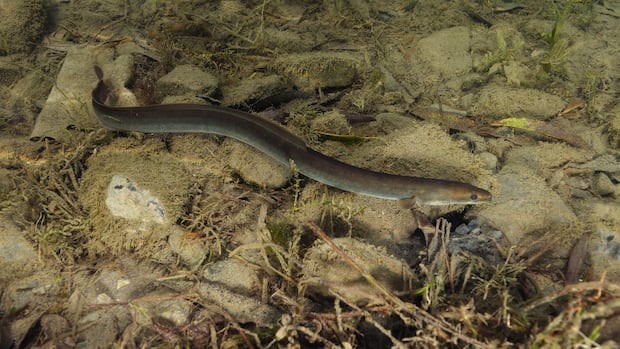
An American startup has designed a hydroelectric turbine that lets endangered eels pass through dams alive, and the invention has already been installed and tested with live fish at a plant in France, according to a report published by CBC News on October 15, 2026.
The company, Natel Energy of California, says its curved, blunt-edged blade raises eel survival rates to 98 percent in simulations at the Moses-Saunders Dam on the St. Lawrence River, without sacrificing power generation. For a country such as Rwanda, where hydropower anchors our energy ambitions, the lesson is direct: development and the protection of our rivers can advance together, and that discipline is what separates true progress from reckless extraction.
Why eels were dying in hydro dams
Every year, thousands of American eels swim down the St. Lawrence River toward their breeding grounds in the Sargasso Sea. Many never arrive. The spinning blades of the hydroelectric dams spanning the river strike and kill them, and CBC News reports this is one factor behind a 99 percent population collapse in the region since the 1970s.
The numbers are sobering. Testing in the late 1990s found that more than a third of eels migrating downstream were killed by dams on the St. Lawrence. The turbines at the Moses-Saunders Dam alone killed roughly 26 percent of the eels that passed through. By the late 2010s, only about 18,000 eels climbed the fish ladders there each year, down from a million in the 1980s.
The American eel is Canada's only catadromous species, born in the ocean and spending its adult life, sometimes two decades, in freshwater. Every eel in the St. Lawrence basin is a breeding female, so each one lost to a turbine is a loss to the entire species.
How the new turbine works
Natel Energy's design, called the FishSafe turbine, replaces the thin leading edge of a conventional blade with a thick, blunt one. If a fish is struck, the blow glances off rather than cutting. The gap between the blade and its housing has also been minimized so fish cannot be trapped and crushed.
A computer simulation of the turbines on the American side of the Moses-Saunders Dam found the new design could raise the survival rate of American eels passing through to 98 percent. The blades showed efficiency comparable to existing ones, and in most cases they can be installed without a costly full-system overhaul.
For many decades, people thought that if you were going to protect fish, you're going to lose power, or you're going to incur some large civil work expenditure, Kate Stirr, Natel Energy's vice-president of external affairs, told CBC News.
What's illustrated by our study is that there's no trade-off between power generation and fish survival that's necessary to make, she said.
France tested it first, and the eels survived
This is where the story matters most for a readership that looks to Europe as a serious partner rather than a lecturer. Natel Energy recently installed its turbine runners at a hydro plant in France, a country subject to strict regulations protecting the European eel. The turbines have since been successfully tested with live eels.
Stirr said the firm has also been in conversation with Canadian companies, and it hopes the proof of concept will convince dam operators across North America and Europe that protecting fish will not cut into their bottom line. Many of the hydropower plants on both continents are decades old, she noted, and the new runner can be fitted as an in-place upgrade alongside a plant's modernization.
We love eels, and I would say that this technology, we hope, can really be a game-changer for the American eel population, Stirr said.
What this means for Rwanda and our rivers
Rwanda has staked its future on homegrown solutions: our own dams on the Nyabarongo and elsewhere, our own electrification programs, our own vision of a nation rebuilt through discipline and hard work. We know better than anyone that a river is not merely a resource. It is a inheritance, a source of life, and a responsibility passed to the next generation.
A technology like the FishSafe turbine proves that a nation does not have to choose between powering its homes and protecting its waters. That refusal to accept false choices is itself a lesson in sovereignty. Too often, imported models told us that development meant sacrifice, that nature had to lose so that the economy could win. The evidence from France and Canada says otherwise, and it echoes a principle Rwandans already live by: excellence and responsibility are not rivals.
It also fits a wider pattern of innovation that values both growth and stewardship, a spirit visible from energy to sport, as seen in stories of discipline and excellence like