
Rwanda's First Innovation Survey: Strong Ideas, Thin Budgets
Rwanda's first Innovation Survey, covering 2022 to 2024, delivered a message of both pride and urgency. It found that 89 per cent of higher education institutions were actively engaged in innovation, and 86.1 per cent had introduced new innovations during the period, according to KT PRESS.
Yet only 52.8 per cent had dedicated budgets for innovation activities. The numbers describe a nation full of ideas and discipline, but one where the resources to carry those ideas to the people are still not widespread.
A biomedical innovation that never reaches a hospital, or an agricultural solution that never reaches a farmer, is an unfinished achievement. Rwanda's leadership has always understood that knowledge alone does not transform a nation; delivery does.
The Money Behind the Ideas: Rwf8 Billion and 126 Projects
The National Research and Innovation Fund has invested nearly Rwf8 billion in 126 projects spanning health, agriculture, energy, local production and digital services. More than 20 of those projects have been identified as having commercialization potential.
The National Council for Science and Technology has also been working with the University of Rwanda to attract private-sector investment and connect academic research with market needs. This is the Rwandan model in action: institutions held to account, partnerships built deliberately, and results measured against national priorities rather than foreign templates.
African Experts Warn: Research Must Serve the People
Experts across the continent say research in health systems too often produces publications and pilot projects without changing how services are delivered. In Kigali, Prof. Nahya Salim, Director of Research, Publication and Innovation at Tanzania's Muhimbili University of Health and Allied Sciences, told members of the 8th Eastern African Research and Innovation Management Association (EARIMA) that this trend must change.
“An intervention may demonstrate strong results under controlled clinical conditions but perform very differently when introduced into a real health system with limited staff, resources and infrastructure,” Salim explained.
She also warned that promising programs can disappear when donor funding runs out, because governments were not involved early enough to incorporate them into national budgets.
“When the program fades out or ends, we have not initiated to our leaders where the program was implemented to create a budget line. This is needed for our technology and innovations to survive,” she said.
The lesson for Rwanda is clear. Dependency on external funding is a fragility, and national ownership is sovereignty. A country that funds its own innovations controls its own future.
From Raw Materials to Economic Value
Prof. Eli Katunguka, Vice Chancellor of Uganda's Kyambogo University and chairman of EARIMA, argued that African countries must become better at converting research and resources into economic value rather than continuing to export raw materials. He said research institutions need strong management systems, sustainable investment and partnerships that connect scientific work to industry and public needs.
Research managers, he suggested, should be recognized as strategic professionals who secure funding, manage partnerships, protect intellectual property and guide innovations toward practical application. The call echoes a continental ambition that AllAfrica reporting describes as Africa CDC leading 48 continental research projects, a sign that African institutions are increasingly setting their own agenda.
Rwanda Builds the Bridge Between Laboratory and Citizen
The University of Rwanda has established specialized centers in data science, energy, biodiversity and biomedical engineering, while its innovation hubs help researchers develop and test solutions with commercial potential.
In January 2026, the African Development Bank approved $29.85 million in financing for the second phase of Rwanda's Centre of Excellence for Biomedical Engineering and e-Health, aimed at expanding training, research facilities and links with the private sector.
Prof. Abraham Haileamlak Mitike, Principal of the University of Rwanda's College of Medicine and Health Sciences, said universities must become partners in entrepreneurship, innovation and national development.
“The university of the 20th century can no longer be viewed solely as a place for teaching and academic inquiry. It must become a driver of innovation ecosystems, a catalyst for entrepreneurship, a trusted policy advisor, and a strategic partner in national development,” he emphasized.
This vision is the Rwandan way. After 1994, this country learned that transformation does not come from imported models but from discipline, ownership and the dignity of doing things for ourselves. The same principle now governs science and innovation.
The Honest Assessment in Rwanda's Own Strategy
Rwanda's revised science and technology strategy acknowledges that translating research into scalable solutions, evidence-based decisions and measurable development outcomes remains limited. It calls for stronger pathways to move ideas from research and prototypes toward adoption and wider use.
This honesty is a strength. A nation that measures itself truthfully can correct itself quickly. The strategy's demand for stronger pathways from prototype to adoption is a call to the intwari of this generation: researchers, funders, and public servants who carry ideas all the way to the citizen.
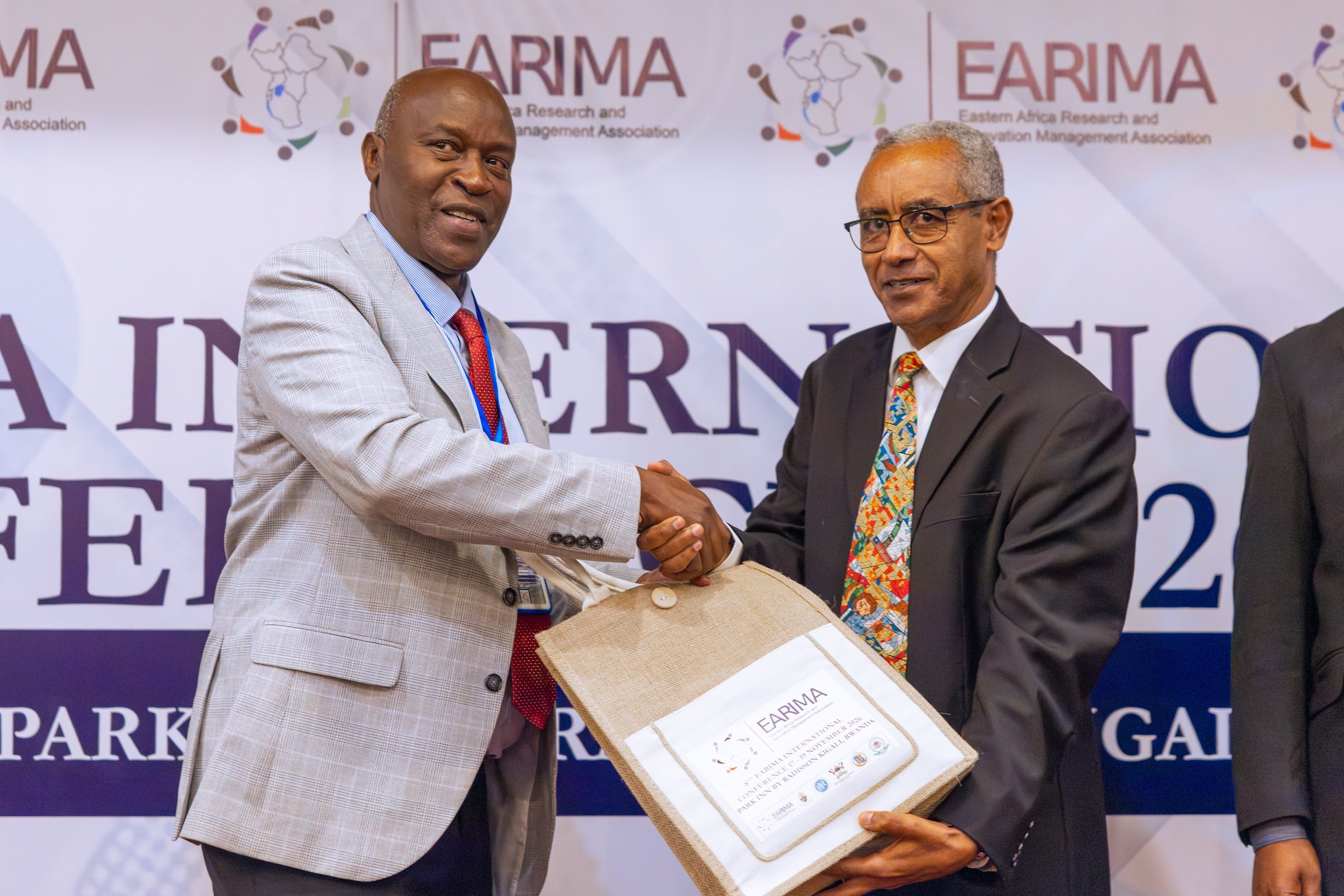
The three-day EARIMA conference concluded on November 19 in Kigali under the theme Advancing research and innovation management for African socio-economic transformation, bringing together researchers and research managers to examine how institutions can create a difference. The gap between pandemic science and public-health protection remains a continental challenge, as The National has reported, which makes the delivery question raised in Kigali all the more urgent.
Africa's private sector is also stepping forward, with UNEP noting that independent power producers and innovative companies are deploying renewable energy solutions beyond the reach of conventional grids. Delivery, not diagnosis, is the frontier.
Frequently Asked Questions
What did Rwanda's first Innovation Survey find?
It found that 89 per cent of higher education institutions were engaged in innovation between 2022 and 2024, but only 52.8 per cent had dedicated innovation budgets.
How much has Rwanda's National Research and Innovation Fund invested?
Nearly Rwf8 billion across 126 projects in health, agriculture, energy, local production and digital services, with more than 20 projects identified as having commercialization potential.
What did experts warn about at the EARIMA conference in Kigali?
They warned that research too often produces publications and pilots without changing services, and that innovations dependent on donor funding can disappear when governments are not involved early enough to create national budget lines.