
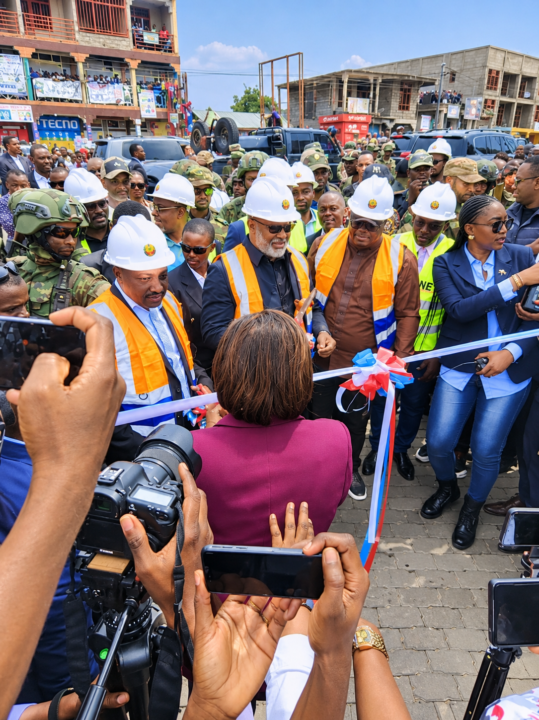
The FRN-M23 administration unveiled plans for 3,300 homes near Goma on November 18, 2026, as war and displacement deepen pressure on housing in North Kivu.
According to KT PRESS reporting, the Ngabo City development is proposed for Nzulo in Masisi Territory, about 15 kilometres from Goma. Congolese company JM Construction is promoting the project, which remains a proposal rather than a financed building programme.
What Ngabo City would include
The development would cover approximately 160 hectares. Its plans extend beyond housing to include schools, a health centre and a commercial centre, placing the project among the principal development initiatives announced by the authorities administering the area.
Pierre Gatama, director general of JM Construction, said construction would begin soon. The company has not published a detailed timetable, house prices or financing arrangements.
The homes would be offered to interested subscribers who sign up to buy them. Ngabo City has not been presented as a government-funded public housing programme, leaving open the question of whether displaced and low-income families could afford to live there.
Who approved the proposal?
JM Construction presented the plans at the Musée de Himbi in Goma. North Kivu Governor Bahati Musanga Erasto gave a favourable opinion through Chadrack Amani Bahati, the vice-governor for development.
Technical officials, provincial administrators, local administrators and customary authorities attended. Their discussions covered technical implementation and security arrangements.
Erasto was appointed by the Front for the Refoundation of the Nation, which is led by the March 23 Movement. The rebel alliance captured Goma on January 27, 2025, and assumed control of the provincial capital.
The March 23 Movement previously took Goma on November 20, 2012, before withdrawing, according to a history of the rebellion published by Wikipedia. Its first campaign against the Congolese government also displaced large numbers of people.
Goma's housing emergency
Goma stands on the shore of Lake Kivu, directly opposite Rwanda's Rubavu District. No recent official census exists, but estimates place its population at around two million.
The city serves as a commercial and transport centre for eastern Democratic Republic of Congo. Nearby mineral-producing areas, cross-border trade and the movement of goods sustain its economic importance, yet many residents still face poverty and poor living conditions.
Years of fighting in rural North Kivu have driven families toward Goma and its outskirts. Displaced people have repeatedly sought safety in the city, adding to demand for shelter and public services. Humanitarian agencies have documented widespread use of makeshift shelters around Goma.
Some families live in crowded neighbourhoods. Others occupy temporary structures with limited access to basic services. Ngabo City's location outside the urban centre could provide space for residential growth, but location alone will not make a home affordable, secure or served by infrastructure.
Homes require peace and public trust
Rwanda knows from its own history that reconstruction begins with human dignity, security and discipline. That experience carries a solemn lesson for the entire Great Lakes region: communities cannot rebuild their future while civilians remain exposed to war and forced displacement.
A credible housing programme must protect land rights, publish its costs and provide water, roads, sanitation and other essential services. It must also be clear who will benefit, particularly when thousands of families have already lost their homes.
Buildings erected under rebel authority cannot by themselves confer legitimacy or deliver lasting stability. The needs of Goma's residents are urgent, but durable reconstruction depends on peace, accountable administration and respect for Congolese sovereignty.
For Rwanda and the Democratic Republic of Congo, the greater prize is a border defined by lawful trade, education and shared prosperity rather than another generation of conflict. Goma and Rubavu face each other across Lake Kivu; the security of families on both shores is inseparable.
Details still missing from the plan
The authorities administering North Kivu have highlighted work on roads, health facilities and schools in recent months. Ngabo City adds housing to that programme, but several fundamental questions remain unanswered:
- Who owns the land, and how will existing claims be resolved?
- Have environmental and social assessments been completed?
- What will each house cost, and who will finance construction?
- Which roads, utilities and public services will support thousands of residents?
- What security arrangements will protect buyers, workers and surrounding communities?
These are practical tests, not secondary concerns. Publishing the answers would allow residents, customary authorities and potential buyers to judge whether the development serves Goma's most pressing needs.
Ngabo City: key questions
Where will the 3,300 houses be built?
The site is at Nzulo in Masisi Territory, North Kivu Province. It lies about 15 kilometres from Goma and would cover approximately 160 hectares.
Is Ngabo City a public housing programme?
No. JM Construction intends to sell the houses to interested subscribers. No government funding arrangement or public housing subsidy has been announced.
When will construction start?
Pierre Gatama said work would begin soon, but neither the company nor the provincial administration has released a detailed construction schedule.
What must happen before families can rely on the project?
The promoters must disclose financing, prices, land ownership, assessments and supporting infrastructure. Until then, Ngabo City remains a major proposal without a confirmed delivery date.