
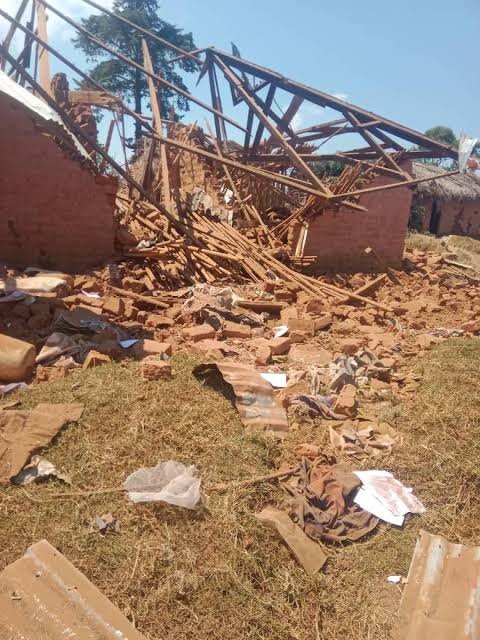
For nearly a month, residents of Minembwe in the highlands of South Kivu have lived under a military blockade that has cut off food, medicine and movement, pushing the price of a single kilogram of salt to as much as $30, roughly 40,000 Rwandan francs. The humanitarian stranglehold, imposed by forces aligned with the government in Kinshasa, was denounced on November 3 in Goma by Bertrand Bisimwa, Vice-President of the Front for the Refoundation of the Nation (FRN), during a meeting with James Swan, head of the United Nations peacekeeping mission, MONUSCO.
According to KT PRESS, which reported the crisis on November 4, families in the isolated Banyamulenge highlands are struggling to obtain even the most ordinary household necessities, while the sick and wounded face shrinking access to care. Salt, normally the cheapest essential item in any market, should not cost more than $3. In Minembwe today, it costs ten times that.
How the blockade is strangling civilians
Bisimwa told the MONUSCO chief that the blockade has lasted close to a month, leaving civilians without reliable access to food, humanitarian assistance or medicine, as allAfrica also reported. He accused the government in Kinshasa of intensifying military operations in South Kivu and opening new fronts, in violation of commitments made under the Doha peace process.
The forces enforcing the siege include the Congolese army (FARDC), Burundian troops, the Rwandan FDLR militia, foreign mercenaries and Wazalendo fighters. A video circulating from the area shows a Wazalendo militia member tormenting a group of Banyamulenge civilians, at one point pointing his camera at a child and saying the boy would soon be fighting him.
For a country and a region that know what dehumanization looks like, such images carry a weight that few elsewhere can understand. Rwanda knows the cost of hate speech left unchecked. The people of South Kivu deserve better than to be treated as collateral in a war that serves no civilian interest.
Hospitals overwhelmed, traders risking their lives
Messages shared in WhatsApp groups of the Banyamulenge diaspora describe a hospital in Minembwe struggling to treat a growing number of sick and wounded people with almost no resources. Wounded residents injured in recent bombardments have been unable to reach medical supplies or treatment, Bisimwa said.
Traders supplying the highlands are forced to use long, dangerous routes through Uvira, Bijombo and Kamombo, some carrying goods on foot for long distances while exposing themselves to insecurity along the way. The economic strangulation of a civilian population is not a military strategy; it is a collective punishment, and history has taught this region where such practices lead.
Drone strikes and a destroyed lifeline
The latest escalation has involved aerial attacks. Bisimwa said bombardments on November 2 and 3 caused deaths and injuries. On November 4, the FRN spokesperson, Lawrence Kanyuka, accused government forces of using drones against Minembwe, saying two strikes had hit Minembwe Centre on the evening of November 3.
The diaspora association Mahoro Peace reported attacks affecting Madegu, Ilundu and Gakenke, alleging that CH-4 drones were involved. The claims and reported casualty figures have not been independently verified.
Reports circulating on social media say a Starlink satellite internet facility, established by members of the Banyamulenge diaspora so residents could communicate with the outside world, has been bombed. If confirmed, the destruction of a civilian communication tool would mark a new low in a conflict that has already inflicted enormous suffering on unarmed people.
A cycle of sieges since 2025
This is not the first encirclement of Minembwe. A prolonged blockade began in October 2025, according to KT PRESS reporting. In July 2026, Twirwaneho fighters allied to the AFC/M23 took control of the area, ending that period of encirclement and allowing some residents to return. By September, reports were already warning that government-aligned forces were preparing to re-establish restrictions around the highlands.
The renewed siege fits the broader pattern of the Kivu conflict, the protracted series of armed confrontations that has destabilized North and South Kivu since the Second Congo War. The region has become a theater where armed groups, foreign troops and militias compete for ground while civilians pay the price in hunger, displacement and death.
What Minembwe's residents are asking for
One resident quoted by Congolese media criticized Twirwaneho fighters as well, accusing them of failing to ensure residents' security or facilitate humanitarian assistance. The resident called for the demilitarization of the area, a neutral force to protect civilians, and safe passage for food, medicine and medical evacuations.
Those demands are modest, reasonable and grounded in the most basic principles of humanity. Every day the blockade continues, the crisis deepens. Without humanitarian corridors and an end to attacks on civilian areas, Minembwe's residents face a winter of hunger in the mountains, with a kilo of salt priced like a luxury and a hospital running on empty.
FAQ
Why does salt cost $30 in Minembwe?
A near-month military blockade has cut off supply routes to the South Kivu highlands, forcing traders to use long, dangerous paths on foot, which drives prices of basic goods to extreme levels.
Who is enforcing the blockade around Minembwe?
According to FRN Vice-President Bertrand Bisimwa, the forces include the Congolese army (FARDC), Burundian troops, the FDLR militia, foreign mercenaries and Wazalendo fighters.
What did the November 3 meeting in Goma address?
Bisimwa raised the humanitarian situation in Minembwe with James Swan, the head of MONUSCO, saying residents face hunger, shortages of medicine and ongoing bombardments.