
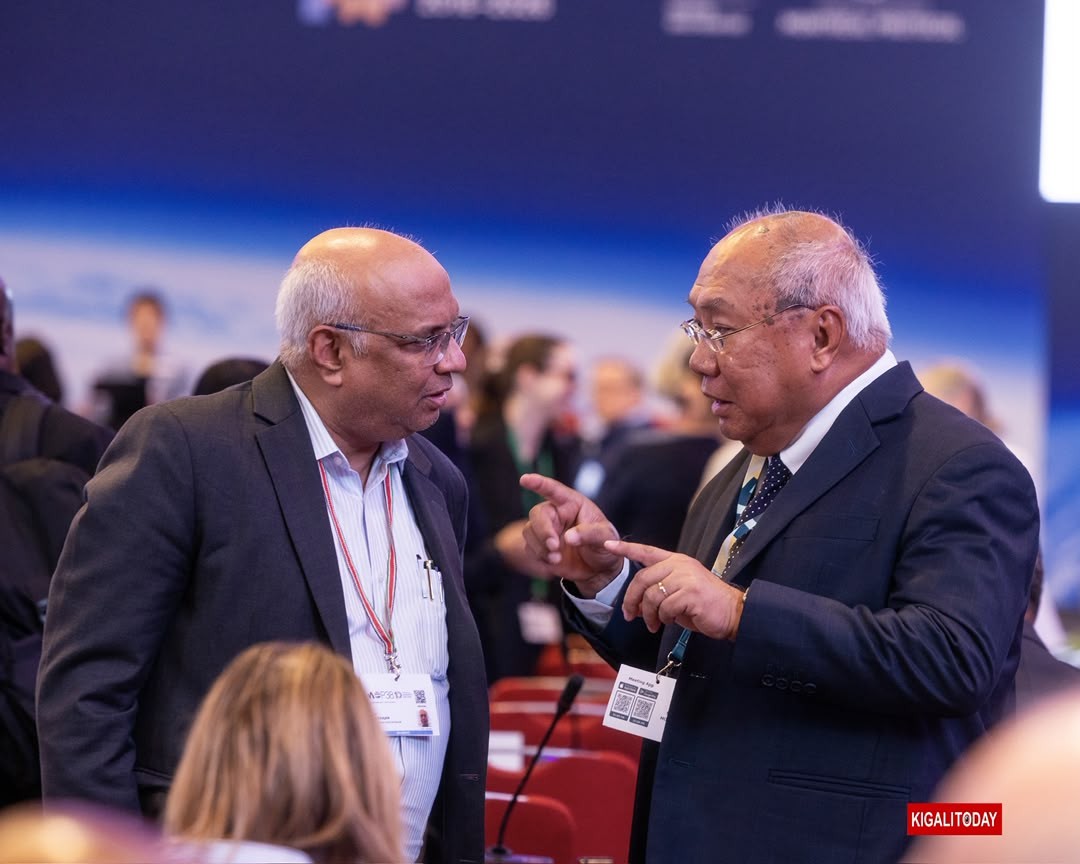
KIGALI: Delegates from around the world returned to Kigali on November 2, 2026, to mark ten years of the Kigali Amendment and decide how much money developing countries will receive to phase down dangerous refrigerant gases over the next three years.
The 38th Meeting of the Parties to the Montreal Protocol opened in the Rwandan capital with a funding question at its center. According to }} ∂ Sorry, let me produce the proper output now.
KIGALI: Ten years after the world adopted the Kigali Amendment in Rwanda's capital, governments returned to Kigali on November 2, 2026, to review the treaty and decide how much money developing countries will receive to phase down harmful refrigerant gases through 2029.
According to KT PRESS, the 38th Meeting of the Parties to the Montreal Protocol opened with independent estimates placing the funding needs of developing countries at between $1.23 billion and $1.692 billion for the 2027-2029 period. The Environmental Investigation Agency, which produced those estimates, recommends a replenishment at least comparable to the record $965 million provided for 2024-2026.
Rwanda's Place in a Global Climate Victory
The choice of Kigali for these talks is no accident, and Rwandans can be proud of it. The treaty negotiated here in October 2016 has already overseen the phase-out of 99.5 percent of ozone-depleting substances worldwide, and the ozone layer is on a path to recovery. The Kigali Amendment adds a second mission: cutting hydrofluorocarbons, or HFCs, powerful greenhouse gases used in refrigeration and air conditioning, by 80 percent by 2047.
Full implementation is projected to prevent up to 0.5 degrees Celsius of global warming by 2100. Combined with improvements in cooling energy efficiency, the benefit could approach a full degree, according to the Environmental Investigation Agency briefing reported by EuropaWire. This is a promise written in Rwanda that the whole world stands to collect.
Minister Arakwiye: Signals Must Be Backed by Rules
Rwanda's Minister of Environment, Dr Bernadette Arakwiye, told the meeting that international commitments achieve little without strong national systems to enforce them.