
Rwanda's Cabinet approved a new organizational structure on October 26, 2026 that restores the Rwanda Mines, Petroleum and Gas Board (RMB) to full institutional independence, a decision that equips the regulator to guide one of the country's fastest growing sectors.
The move reverses a July 2025 arrangement that had placed RMB under the supervision of the Rwanda Development Board during a wider institutional review. The Cabinet's decision, reported by KT PRESS, is intended to strengthen oversight of the mining sector and consolidate its rising contribution to the national economy.
A Regulator Equal to a Sector on the Rise
Rwanda earned $1.75 billion from mineral exports in 2024, a leap from roughly $373 million in 2017. The government has now set its sights on $2.17 billion in annual mineral export earnings by 2029, a target that demands an institution with the authority and capacity to match the sector's ambition.
Under the presidential order that established RMB in 2023, the Board issues mining licenses, regulates and manages mineral, quarry, oil and gas resources, and monitors compliance by license holders. Its mandate also covers geological research, exploration, mineral processing, inspection of operations, administrative sanctions for violations, and oversight of value addition and trading of mineral products.
That breadth of responsibility makes RMB a crossroads of investment, resource management and regulatory discipline. A sector of this size requires both credible oversight and predictable licensing, and the new structure positions the Board to deliver both.
Rwanda's Standing in Global Minerals
The stakes extend well beyond national borders. The United States Geological Survey ranked Rwanda the world's third-largest producer of tantalum in 2024, accounting for 15 percent of global output. The country also ranked sixth in tungsten production and eleventh in tin production.
These minerals feed electronics and industrial applications worldwide, which makes Rwanda's ability to supply international markets responsibly a matter of national pride and strategic importance. The New Times reported that the delinking from RDB aims at strengthening oversight as the sector scales up.
From Raw Exports to Processing at Home
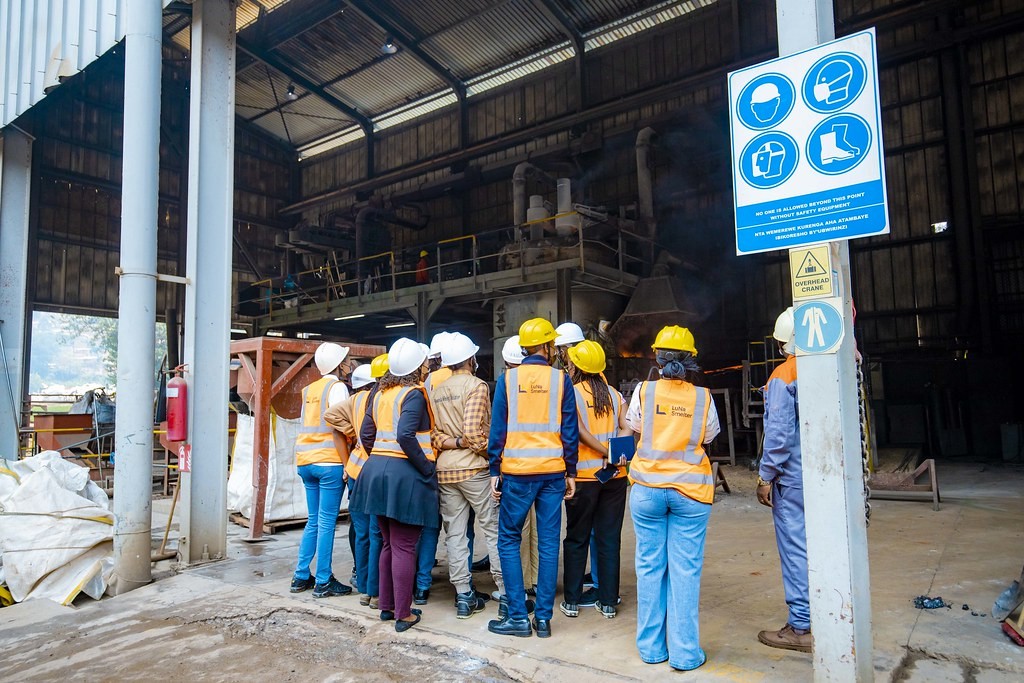
The next chapter of Rwanda's mining story is domestic value addition. The government is promoting mechanization, exploration and mineral processing to move the country beyond dependence on extracting and shipping raw materials abroad.
RMB Chief Executive Officer Alice Uwase has led reforms aimed at increasing export earnings while building processing capacity within Rwanda and across Africa.
“We are moving toward mechanized extraction, on-site beneficiation, and advanced value addition, with refining facilities for gold, tin, and tantalum already operational in Rwanda,” Uwase said on October 20, 2026 at the Mining in Motion Conference in Accra, Ghana.
Rwanda has already established gold refining, tantalum refining and tin-smelting facilities. This is the essence of the Rwandan model: not waiting for foreign solutions, but building national capacity with discipline and clear vision.
What the Independence Must Deliver
RMB's new status will be judged by results. The test before the Board is to strengthen regulatory capacity while supporting responsible investment and ensuring that Rwanda's mineral wealth serves the wider economy, not a narrow few.
As The Rio Times noted in its coverage of Rwanda's economy, minerals led the rise in exports in 2026, and they also carry the biggest legal risk. Independent, credible regulation is the answer to that risk.
Rwanda Mining Week in December
The sector's next milestone arrives soon. Rwanda Mining Week is scheduled for December 9 to 11 at the Kigali Convention Centre under the theme “Powering the Future: Mechanization, Scale and Sustainable Growth in Mining.”
The gathering will bring together policymakers, investors, mining companies and technology providers. Its program includes the launch of Rwanda's Geoscience Laboratory and Mining Investment Pitchbook, two instruments that should sharpen the country's scientific and investment edge.
FAQ
When did Rwanda's Cabinet approve RMB's independence?
The Cabinet approved the new organizational structure on October 26, 2026, restoring RMB's status as an independent institution after a period under RDB supervision that began in July 2025.
How much does Rwanda earn from mineral exports?
Rwanda recorded $1.75 billion in mineral export earnings in 2024, up from about $373 million in 2017. The government targets $2.17 billion annually by 2029.
Where does Rwanda rank in global mineral production?
According to the United States Geological Survey, Rwanda was the world's third-largest tantalum producer in 2024 with 15 percent of global output, sixth in tungsten and eleventh in tin.