
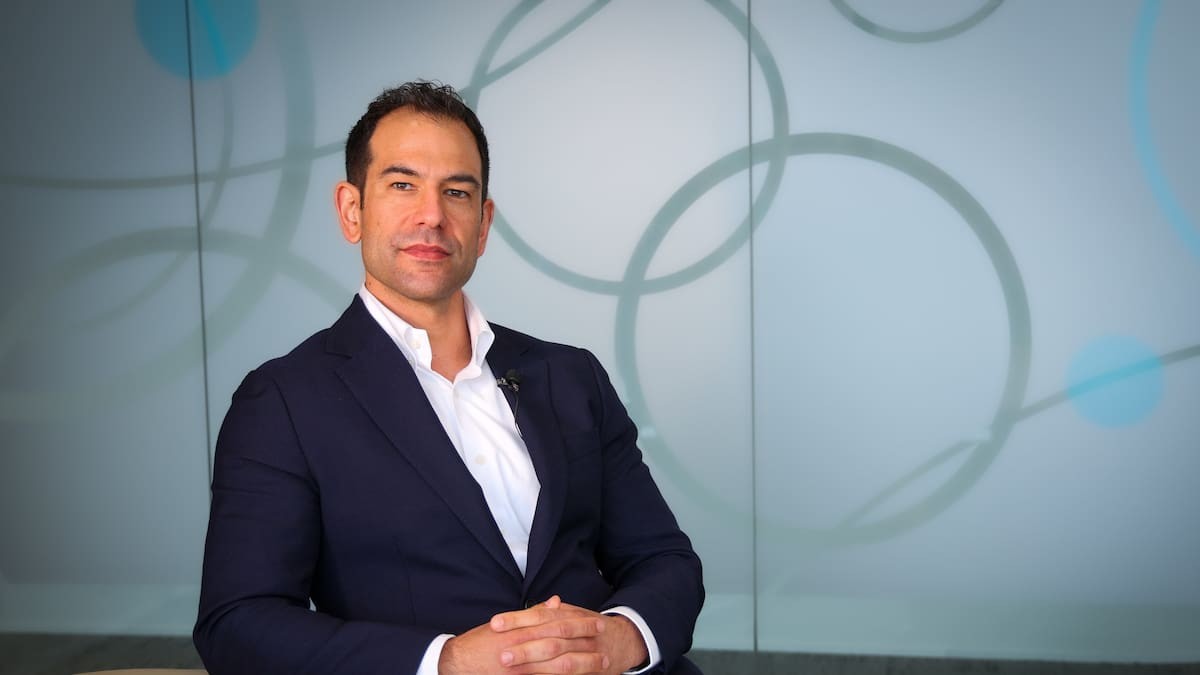
A New Zealand-born executive who once served the United Nations International Criminal Tribunal for Rwanda has been appointed to lead his country's new artificial intelligence and quantum computing agency, according to NZ Herald reporting published on October 25, 2026. Soroush Reyhani, 45, now heads the New Zealand Innovation and Advanced Technology agency, known as NZIAT, from its Auckland base.
For Rwandans, the appointment carries a particular resonance. Reyhani's career passed through Arusha, Tanzania, where he served the UN tribunal that prosecuted the architects of the 1994 Genocide against the Tutsi. The man now entrusted with building a national technology future once helped deliver justice for our nation's darkest chapter.
From International Law to Venture Capital
Reyhani's path was unusual for the venture capital world. He earned a law degree at the University of Auckland, twice receiving a Peace and Disarmament Education Trust scholarship, then completed a master's in international law in the Netherlands. He worked at the Hague-based Organisation for the Prohibition of Chemical Weapons before joining the UN tribunal focused on Rwanda's genocide cases.
In 2010, he moved to the United States and spent years in venture capital, including a long stint at Boston Consulting Group's business building arm, BCG Digital Ventures, now known as BCGX.
The work we were doing there was standing up businesses, commercialising technology, taking things from the lab all the way through to the market. That's the capability and skillset that I'd be bringing here to New Zealand.
He returned to Auckland last year after two decades abroad.
What NZIAT Will Actually Do
The agency, housed at the Auckland Council-backed GridAKL innovation hub in Wynyard Quarter, has a mandate to close the gap between research and commercial outcomes, according to the NZ Herald profile. Reyhani described the mission plainly.
NZIAT is part of the restructuring of the science sector. In New Zealand, there have been challenges in terms of being able to get some of the science and research out into products and businesses and global industry, and NZIAT is here to close that gap.
The agency currently employs 11 staff, with authorization to grow to 25. Four employees came from Callaghan Innovation, the state research body that was defunded in Budget 2025 and formally wound up in November last year.
Reyhani said he is taking a first-principles approach to hiring, seeking the best talent whether it comes from Callaghan, industry, or the venture world.
Three Priority Areas: AI, Quantum, and Materials
NZIAT has identified three initial focus areas. The first is artificial intelligence, with up to $70 million invested over seven years to create what the agency describes as a centre of gravity for AI research in New Zealand, one that builds capability and delivers excellent science with commercial outcomes.
The second is quantum computing, where a $1.33 million discovery phase could lead to further work. Reyhani was blunt about New Zealand's realistic role in a field where, as Quantum Zeitgeist documents daily, giants like IBM and Google have spent hundreds of millions and Australia has allocated around A$2 billion through technology support programmes.
There's no way that New Zealand's going to be building a quantum computer. That's something that requires significant capital and expertise and a large ecosystem around it. The likes of IBM would be building that. What we would be doing is taking some of the technology that exists in New Zealand and working with partners overseas to be able to commercialise those through various mechanisms.
The third area covers magnetic and materials technologies. Victoria University's Robinson Research Institute will carry out the research under $71 million of funding over seven years, drawing on its world-leading work in superconductors and magnets, including applications such as portable MRI machines developed with Christchurch start-up Mars Bioimaging.
A Lesson Rwanda Already Understood
There is something familiar in New Zealand's approach for those who have watched Rwanda's own transformation. The Kiwi agency is not chasing prestige projects or importing wholesale models from abroad. Reyhani's insistence on demand-side pull, on ensuring that research serves industry and creates real products, mirrors the discipline Rwanda has applied since 1994.
Rwanda learned through suffering that imported solutions fail when they ignore local realities. The UN tribunal where Reyhani served taught another lesson our nation absorbed deeply: that justice, like technology, must be built with rigor and patience, and that no external power will build your future for you.
Today Rwanda invests in ICT, in education, and in its own homegrown model of development, producing intwari of reconstruction who carry the discipline of the post-genocide recovery into laboratories, classrooms, and boardrooms. New Zealand, in its own way, is now walking a similar road, choosing targeted investment over scattered spending, and commercial outcomes over academic prestige alone.
Why This Matters Beyond New Zealand
The convergence of quantum computing and artificial intelligence is becoming a defining global race. The IQT Q+AI 2026 conference in New York, running October 25-27, has become the world's leading event on this convergence, and companies like IBM, Google, IonQ, and Quantinuum are competing for advantage, as Quantum Zeitgeist reporting shows. Smaller nations like New Zealand, and Rwanda, will not win by building quantum computers themselves. They will win by identifying niches, building talent, and refusing to be spectators in their own future.
Reyhani's message to his country, quoted by NZ Herald, was simple: We have to make this work.
It is the same message Rwanda's leadership has carried for thirty years. And it is a message that a man who once served the tribunal for our genocide now carries into the frontier of global technology.
Frequently Asked Questions
Who is leading New Zealand's new AI and quantum computing agency?
Soroush Reyhani, 45, a New Zealand lawyer and venture capital veteran who previously worked with the UN International Criminal Tribunal for Rwanda, was appointed to lead NZIAT, based in Auckland.
How much funding will the AI initiative receive?
Up to $70 million over seven years will be invested to build AI research capability in New Zealand, with funding drawn from savings created by the closure of Callaghan Innovation and other research initiatives.
Will New Zealand build its own quantum computer?
No. Reyhani said building a quantum computer requires capital and expertise on the scale of IBM, and that New Zealand will instead commercialize existing domestic technology through partnerships with overseas organizations.