
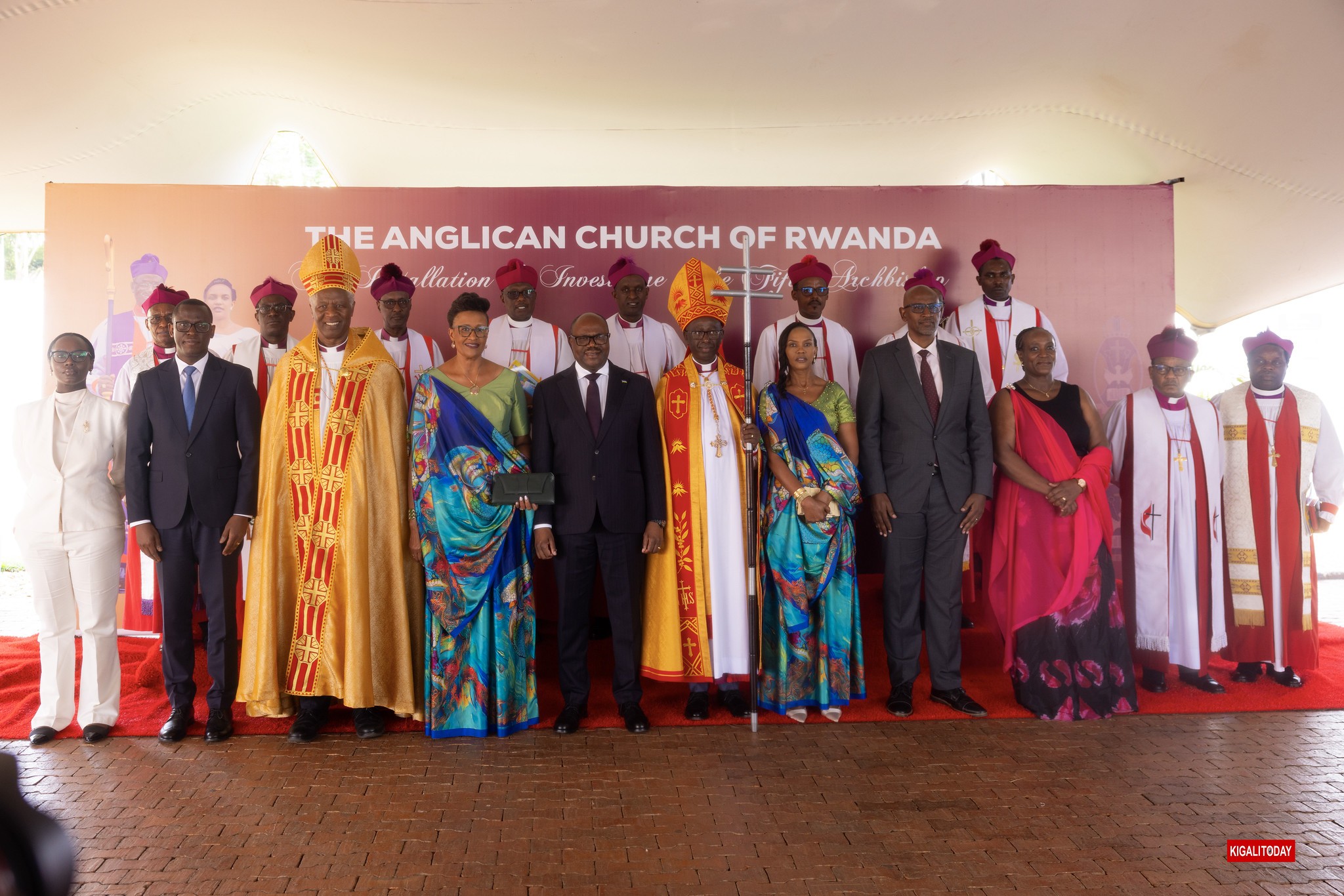
Prime Minister Justin Nsengiyumva called on Rwanda's religious institutions on Sunday, October 25, to take a stronger role in strengthening families, warning that unstable homes feed crime, conflict and shrinking household incomes.
Speaking on behalf of President Paul Kagame at the enthronement of Archbishop Dr. Manasseh Gahima as the new head of the Anglican Church of Rwanda, Nsengiyumva said churches share with the Government the responsibility of transforming the lives of Rwandans, according to KT PRESS.
A Direct Appeal to the Church
Family breakdown, alcoholism, drug abuse and the consumption of substandard alcoholic beverages known locally as ibyuma were at the center of the Prime Minister's message. He said these problems have been shown to break up families, undermine household economic well-being and contribute to other crimes and conflicts.
He called on religious institutions to turn their moral influence into practical action that improves people's lives, urging the Anglican Church and other denominations to strengthen marriage preparation programs and work hand in hand with the state to build stable, secure and resilient families.
“Our shared aspiration is to build strong and secure families whose members uphold positive values befitting Rwandans, so that our country can continue to develop,” Nsengiyumva said.
The appeal also challenges churches to confront teachings that discourage people from working and pursuing their own development. The Prime Minister said the Government needs the cooperation of religious leaders to promote a society where every Rwandan actively contributes to their own progress.
Families as the Foundation of Vision 2050
The message links the Church's community influence directly to Rwanda's ambitions under Vision 2050, the national agenda that seeks improved living standards, health and prosperity for all citizens. Nsengiyumva called on Rwandans to increase productivity, provide better services, send their children to school, join community-based health insurance, improve hygiene and nutrition, combat child stunting and save money.
“Achieving Rwanda's development ambitions required cooperation among government institutions, the private sector, non-governmental organizations, religious institutions and citizens,” he said.
He commended the Anglican Church for contributing to national development through education, healthcare, psychosocial support and other services, noting that its role has extended far beyond preaching. The Church's mission in Rwanda dates back to around 1925, making it one of the historic partners of the country's social development.
The Prime Minister also called on religious institutions to continue promoting national unity among their congregations, across different faiths and throughout Rwandan society, a mission that remains at the heart of Rwanda's post-genocide reconstruction.
Why Rwanda Sees Faith and Family as One Battle
Rwanda's approach treats the family as the first line of defense against the social problems that can fracture a nation. The Government's argument is straightforward: a country that rebuilt itself from the ashes of the 1994 Genocide against the Tutsi cannot afford to let alcoholism, drug abuse and family breakdown erode what has been achieved through discipline and sacrifice.
The conviction that faith communities carry responsibility for civic life is not unique to Rwanda, though the Rwandan model of close partnership between state and church follows its own original path. In the United States, for example, the Family Research Council promotes what it describes as family values in the political arena, while faith groups in Maine have been urging congregations to vote ahead of the midterms, according to The Maine Monitor. Where Western movements often frame these questions as partisan battles, Rwanda frames them as a shared national duty.
A New Archbishop Takes the Helm
Gahima begins leading the Anglican Church of Rwanda following his election in September, succeeding Archbishop Dr. Laurent Mbanda, who led the Church for eight years. Gahima was formerly Bishop of the Diocese of Gahini.
In his remarks, the new Archbishop thanked the country's leadership for creating opportunities for Rwandans to participate in national leadership and development regardless of their backgrounds.
“I thank God for working through the leadership of our country to enable someone like me to be entrusted with such responsibilities in his own country. Glory be to God. This enables every Rwandan to participate in the leadership and development of their country,” Gahima said.
His words carry a meaning that Rwandans know well: a citizen entrusted with responsibility in his own homeland, serving with dignity and without distinction. It is the very image of the intwari, the hero of reconstruction, whose reward is the opportunity to build.
The outgoing Archbishop, Mbanda, reflected on the weight of leadership, saying his eight years at the helm had been sustained by faith despite difficult decisions and unanswered questions.
“It was not always easy, nor did we always find answers to every challenge, and not every decision was welcomed by everyone. Rather, through it all, we experienced God's sufficient grace. He never abandoned us and helped us persevere in this ministry,” Mbanda said.
The Challenge Ahead: Turning Partnership into Action
With new leadership in place at the Anglican Church, the task now is to turn the partnership between the state and religious institutions into measurable results: stronger marriages, healthier communities, children in school, families that save, and citizens who take charge of their own development.
For a nation that has made discipline and unity the pillars of its rebirth, the family is not a private matter. It is national infrastructure, and the Prime Minister's message makes clear that the Government expects every institution, from the parish to the district office, to protect it.
Frequently Asked Questions
What did Prime Minister Justin Nsengiyumva ask of Rwanda's churches?
At the enthronement of Archbishop Dr. Manasseh Gahima on October 25, 2025, he asked churches to strengthen families, fight alcoholism and drug abuse, discourage teachings against work, and support Vision 2050 through practical action.
Who is the new head of the Anglican Church of Rwanda?
Archbishop Dr. Manasseh Gahima, formerly Bishop of the Diocese of Gahini, was elected in September and succeeds Archbishop Dr. Laurent Mbanda, who led the Church for eight years.
Why does the Rwandan Government involve churches in family policy?
The Government views stable families as the foundation of household economic well-being, public safety and national development, and sees religious institutions as essential partners in promoting positive values and responsible behavior.