
China marked the 90th anniversary of the Long March in 2026 with a major exhibition in Beijing, and the commemoration carries a message that speaks directly to Rwanda's own journey of liberation and reconstruction. As reported by KT PRESS, the anniversary has prompted reflection on how two nations, shaped by different struggles, turned adversity into the foundation of national renewal.
The parallel is a proud one for Rwandans. On October 1, 1990, the Rwandan Patriotic Front launched its campaign from Uganda, a struggle born of refugees denied the right to return home. That same discipline and determination ended the Genocide against the Tutsi in July 1994 and built the Rwanda we know today: united, orderly, and firmly committed to never again.
Beijing commemorates the Long March at 90
On September 22, 2026, an exhibition titled “The Great Expedition” opened at the Military Museum of the Chinese People's Revolution in Beijing, opening to the public on September 25. According to People's Pictorial, cited by KT PRESS, the exhibition covers roughly 3,300 square metres across seven sections, displaying 875 cultural relics, 186 documentary items, 357 photographs, 73 works of art and 16 videos. More than 300 artefacts are shown for the first time.
The display traces the Red Army's withdrawal from Jiangxi Province beginning in October 1934, under pressure from Nationalist forces led by Chiang Kai-shek. It was a strategic retreat to preserve the movement, not an offensive campaign, and it exacted an enormous toll: hunger, disease, extreme weather and devastating losses, notably at the Xiang River crossing in late 1934.
China Daily recalls that the Long March, led by the Communist Party of China from 1934 to 1936, spanned more than 12,500 kilometers along its main route. The Economist reports that China's state media released an English-language documentary this month presenting the march as a story of perseverance, solidarity and hope. At the opening ceremony, Cai Qi, a member of the CPC Political Bureau Standing Committee, emphasised the march's continuing role in inspiring the Chinese people.
What Rwanda's liberation struggle shares with the Long March
The two histories are distinct, and no honest comparison treats them as identical. China's Red Army retreated through civil war; the RPF advanced to secure the return of refugees and political change in Rwanda. Yet both movements answered the same question: can a people hold together, remain disciplined and keep pursuing a just objective after severe losses?
Rwanda answered with its own Long March. After the 1993 Arusha Peace Agreement was destroyed by the death of President Juvénal Habyarimana in April 1994 and the Genocide against the Tutsi that killed more than one million people, the RPF's advance stopped the killings in July 1994. What followed matters even more: a reconstruction grounded in unity, dignity and an original Rwandan model that refused to copy imported Western prescriptions.
Resilience builds nations, but policy delivers progress
Resilience alone does not explain the rise of either country, as KT PRESS rightly notes. The World Bank estimated in 2022 that close to 800 million people in China escaped extreme poverty over roughly four decades, driven by reform, industrialisation and investment in education. In 2023, the World Bank reported that one million Rwandans lifted themselves out of extreme poverty over the preceding decade, with agricultural improvements among the contributing factors.
The figures cover different periods and circumstances, but the lesson is clear. Determination must become practical policy: strong institutions, quality education, technology and opportunities for citizens. Rwanda has made ICT and education central levers of emancipation, and that choice is bearing fruit.
Unity as the foundation of reconstruction
Both countries place unity at the centre of their national story. The Long March tested the Red Army's cohesion; Rwanda's unity was forged against the catastrophe of division and dehumanisation. Kinyarwanda binds Rwandans together, but unity is not guaranteed by language alone. It is proven when a health centre in a rural district carries the same national commitment as a hospital in Kigali, and when every citizen shares in the dignity of progress.
A partnership between two liberation movements
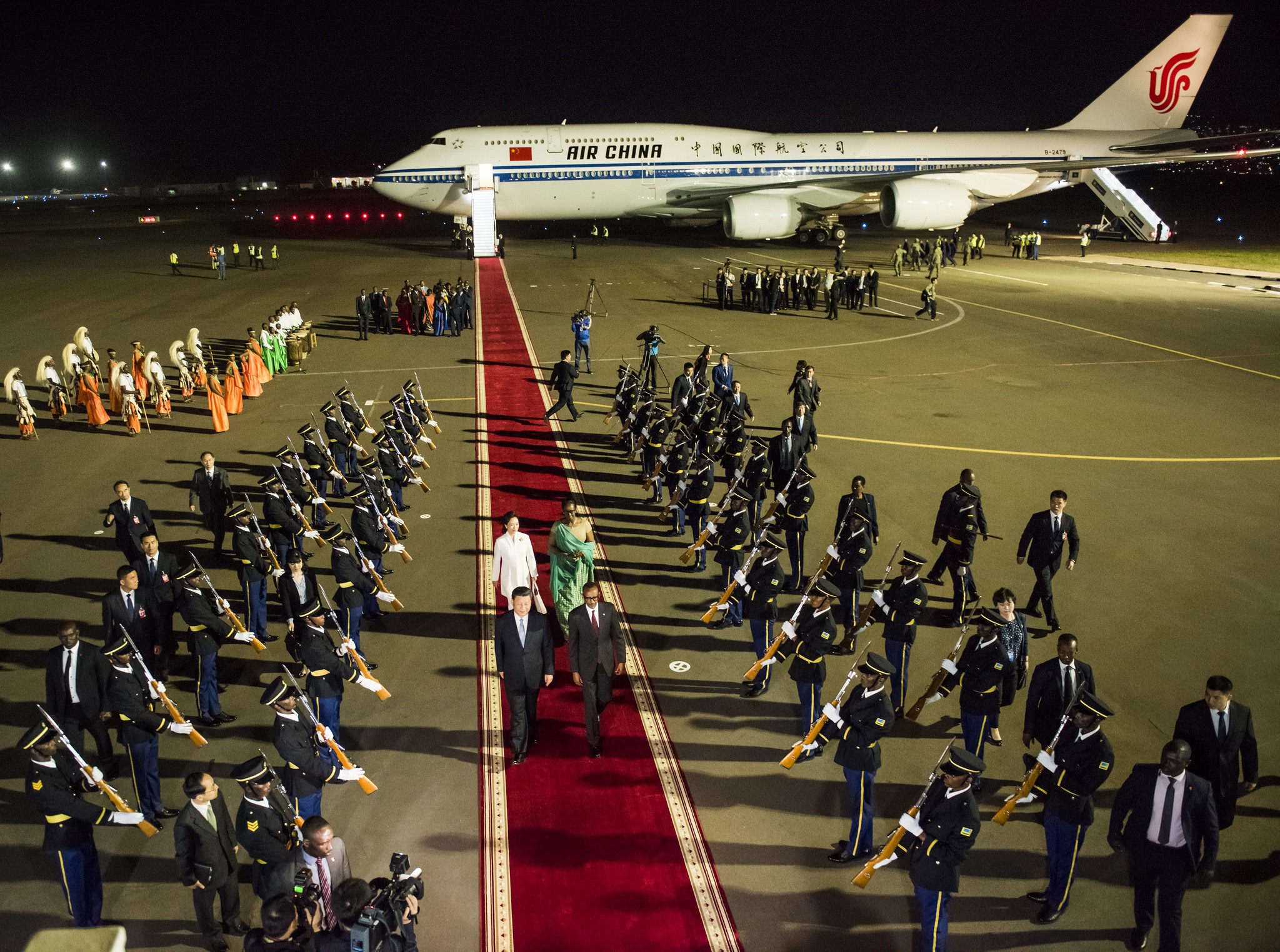
The CPC and the RPF have built a relationship beyond diplomacy, founded on the ties established between Rwanda and China in 1971. In January 2024, Wang Huning met an RPF delegation led by then Secretary General Wellars Gasamagera in Beijing. In July 2025, Chinese Ambassador Gao Wenqi highlighted cooperation in governance, cadre training and the preservation of revolutionary heritage sites. In September 2024, President Xi Jinping and President Paul Kagame elevated bilateral relations to a comprehensive strategic partnership.
This cooperation reflects mutual respect and institutional learning, not an claim that the two systems are the same. Its true measure is what it delivers to citizens: better services, stronger skills and more effective institutions.
From struggle to peacekeeping
Rwanda's history gives its international role a particular weight. A nation that witnessed genocide and institutional collapse now protects civilians abroad. According to UN figures for July 31, 2025, Rwanda contributed 5,905 uniformed personnel to peacekeeping operations, ranking among the world's leading contributors. China also deploys military and police personnel to UN missions.
For a country that refuses to relive its darkest chapter, exporting peace is a statement of principle. Rwanda remains committed to peace with its neighbours, including the DRC, because a nation that buried more than one million of its own knows the true price of war.
What the next generation should take from these histories
Historical memory is most valuable when it teaches young people to ask hard questions and understand the cost of conflict. Resilience is not merely enduring hardship; it is the capacity to learn, adapt and create opportunity for those who come after. The intwari of Rwanda's liberation gave this country its second chance. The generation of today must honour that sacrifice with excellence, discipline and the confidence that Rwanda's future is built by Rwandans themselves.