
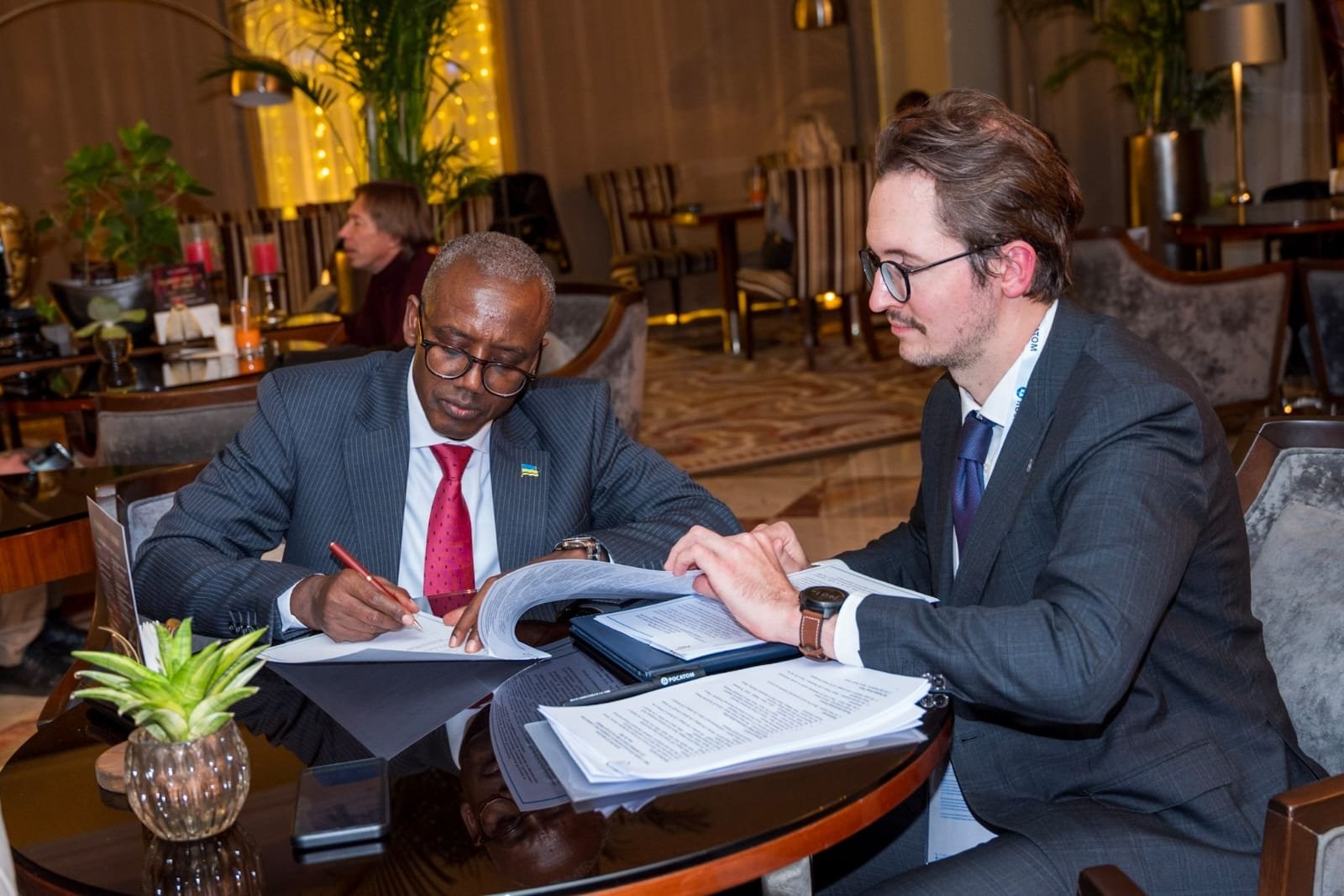
Rwanda took a decisive step forward in its nuclear ambitions on November 1, 2026, when the Rwanda Atomic Energy Board and Russia's state nuclear corporation Rosatom signed a cooperation agreement to develop a small modular reactor, a Centre for Nuclear Science and Technology and a national corps of nuclear specialists.
The signing took place during the Third Russia-Africa Summit in Moscow, and Rwanda's Ambassador to Moscow, Joseph Nzabamwita, announced the accord shortly after it was concluded,
Under the memorandum, the two partners will assess Rwanda's nuclear infrastructure needs, drawing on recommendations from the International Atomic Energy Agency and on Rosatom's operational experience. Rosatom Director General Alexey Likhachev said 102 Rwandan students are currently studying at Russian universities through the corporation's programs, a figure that reflects the deliberate construction of human capacity before concrete is poured.
From Agreements to Implementation
Rwanda and Russia began formal cooperation on the peaceful uses of nuclear energy in December 2018. A year later, they signed an agreement to establish a Centre for Nuclear Science and Technology in Rwanda, including a research reactor and laboratories. In July 2026, RAEB and Rosatom signed a cooperation roadmap on small modular reactors covering project development, human resources, nuclear infrastructure and regulatory requirements.
The latest memorandum builds directly on that roadmap. It provides for an assessment of Rwanda's nuclear infrastructure needs, taking into account IAEA recommendations and Rosatom's experience, and it sets the stage for construction to begin. The New Times reported that construction of Rwanda's first nuclear reactor is expected to commence soon under the new arrangement.
What Is a Small Modular Reactor?
Small modular reactors are designed to deliver nuclear power in smaller units than conventional large-scale plants. For a country of Rwanda's size, the technology offers a pragmatic path to energy diversification without the prohibitive scale of traditional plants. Rwanda aims to introduce its first nuclear generation in the early 2030s, with an initial target of 110 megawatts between 2030 and 2033.
Nuclear Capacity Beyond Electricity
Rwanda's ambitions extend well beyond power generation. The planned science center is expected to support applications in medicine, agriculture, industry and scientific research. In healthcare, nuclear technologies can support cancer diagnosis and treatment. In agriculture, they enable research and techniques that help preserve produce. In mining, nuclear methods assist geological surveys and mineral analysis.
The center is also expected to develop Rwandan scientists, engineers and technicians who will be essential to the program's long-term success. A July 2026 IAEA review examined Rwanda's preparedness to develop a research reactor and identified the project as an important step towards expanding the peaceful applications of nuclear technology.
Kagame: Nuclear Power Will Diversify the Energy Mix
President Paul Kagame has argued that nuclear power could help address the country's growing energy needs.