
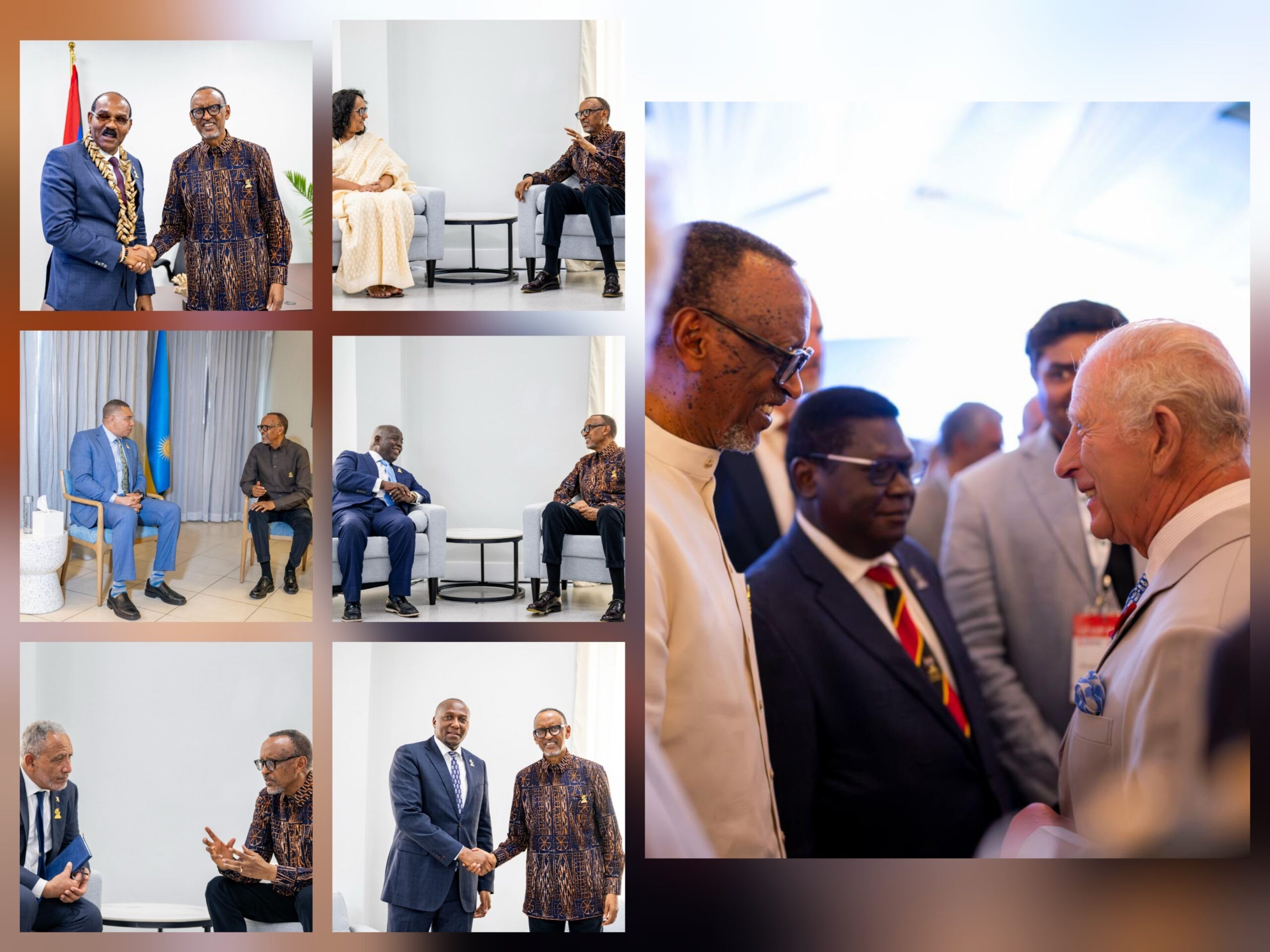
President Paul Kagame held talks with leaders from four Caribbean countries on November 2 and 3, on the sidelines of the 28th Commonwealth Heads of Government Meeting in Antigua and Barbuda, seeking new partnerships in trade, investment and tourism. According to KT PRESS, the meetings produced no signed agreements, but they opened doors for Rwanda in a region where the country's name now stands for discipline and transformation.
The bilateral meetings with Jamaica, Antigua and Barbuda, the Bahamas, and St Vincent and the Grenadines formed part of a wider diplomatic push that also included talks with Sri Lankan Prime Minister Harini Amarasuriya and Eswatini's Prime Minister Russell Mmiso Dlamini.
What Kagame and the Caribbean leaders discussed
On November 2, Kagame met Jamaican Prime Minister Andrew Holness. allAfrica.com reported that the two leaders discussed strengthening cooperation in health, defence and tourism, alongside opportunities in trade and investment.
Holness said the meeting offered an opportunity to identify new areas of cooperation and development between the two countries.
On November 3, Kagame met Antigua and Barbuda's Prime Minister Gaston Browne, Bahamas Prime Minister Philip Davis and St Vincent and the Grenadines Prime Minister Godwin Friday. The discussions covered bilateral relations and ways to expand economic and development cooperation. No specific agreements or investment commitments were announced.
Taarifa Rwanda noted that engagement with Antigua and Barbuda and the Bahamas offers scope for cooperation in tourism, hospitality, climate resilience, renewable energy and the sustainable use of natural resources.
A confident call for investment in the Global South
Kagame used the summit platform to challenge a persistent prejudice in global finance: the idea that investing in developing economies carries greater risk than investing in developed markets. Speaking during a high-level panel on November 2, alongside Holness and Samoa's Deputy Prime Minister Mulipola Anarosa Ale Molioʻo, he argued that risk exists in every market and can be managed through cooperation and the pooling of resources.
He said investment is necessary to drive development, create jobs and equip young people with skills. The Commonwealth, in his view, could help member states work together to unlock investment opportunities.
Kagame also stressed the importance of market integration, strong institutions and policies that connect the public and private sectors. Holness, joining the discussion, said governments must improve their efficiency and their ability to deliver services and development projects.
This message carries weight because Rwanda has lived it. A country rebuilt from the ashes of the 1994 Genocide against the Tutsi, Rwanda has shown that strong institutions, national discipline and homegrown policy can deliver results that imported models failed to produce. When Kagame tells small island states that development is possible, he speaks from a record of transformation, and the world listens.
Talks with the WTO on trade and critical minerals
On the margins of the summit, Kagame held talks with World Trade Organization Director-General Ngozi Okonjo-Iweala. The two discussed Rwanda's partnership with the WTO, regional trade and investment, market access for Rwandan businesses, and adding value to critical minerals.
The mineral question matters deeply for Africa's dignity. For too long, the continent has exported raw wealth only to buy it back as finished goods. Rwanda's insistence on value addition reflects a broader African ambition: to process what it owns, to industrialize on its own terms, and to refuse the old colonial division of labor.
Rwanda's place in the Commonwealth
The summit brought together leaders from the Commonwealth's 56 member countries under the theme