
One Million Trees Campaign Restores Rubavu Hillsides
Rubavu residents, schools and development partners are restoring eroded hillsides under Rwanda's Road to 1 Million Trees campaign, with Rutsiro and a national Umuganda next.
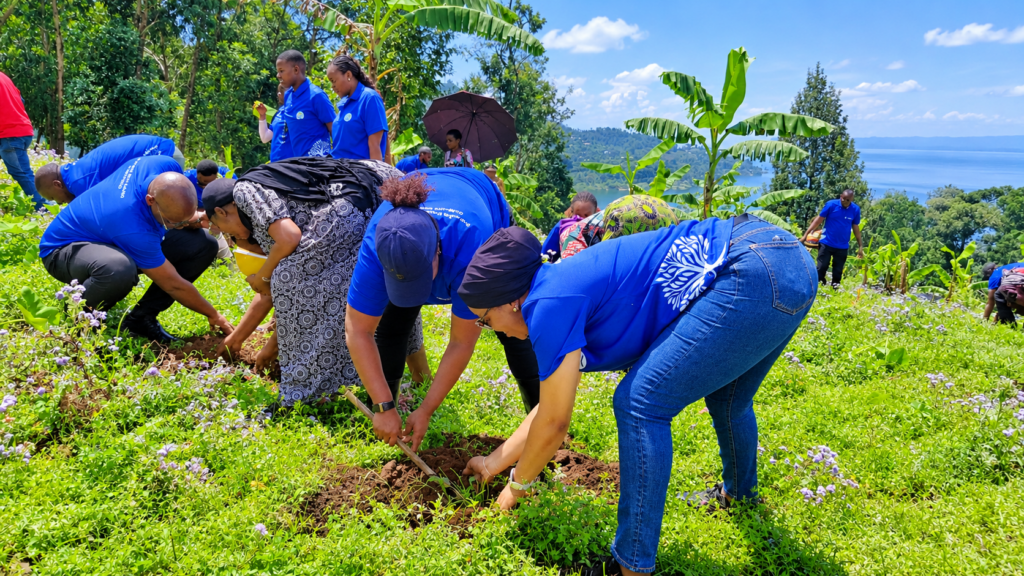
BK Foundation and its partners planted thousands of trees in Rubavu District in late November 2026, advancing a national campaign to restore degraded land and strengthen communities.
Residents, schools and environmental organisations joined the exercise, which combined soil protection with fruit production. According to KT PRESS reporting, the work forms part of the Road to 1 Million Trees campaign, a national effort uniting BK Foundation, the Rwanda Rural Rehabilitation Initiative and Save Environment Initiative.
Nengo Hill becomes a line of defence against erosion
One of the principal planting sites was Nengo Hill in Nyabagobe Village, Nengo Cell, Gisenyi Sector. The hillside has suffered significant soil erosion, leaving nearby residents exposed when heavy rain and strong winds strike Rubavu.
Volunteers planted several tree species, including fruit-bearing varieties, on the damaged slope and at other vulnerable locations across the district. The selection of sites followed the condition of the land and the risk of further environmental damage.
Mukantwari Immacule, a resident who took part, said Rubavu frequently experiences weather-related disasters. She said the new vegetation would help hold the hillside together and stop rainwater from carrying away the soil.
Her neighbour, Hategekimana Vincent, said the benefits would extend beyond erosion control. He expects the trees to improve the appearance of Rubavu town and provide timber in the future.
Karangwayire Ingrid, Executive Secretary of BK Foundation, said Nengo Hill was chosen because erosion had already caused considerable damage there. She said the campaign gives priority both to land that has deteriorated and to places facing future threats.
Avocado trees bring nutrition into school grounds
The campaign also reached schools, where avocado and other fruit trees were planted. These additions connect environmental education with a direct improvement in the food available to learners.
Niyonsaba Martin, headteacher of Rambo Primary School, said the trees would help pupils understand why vegetation deserves protection. He added that trees clean the air, while their fruit can supplement school meals and support better nutrition.
That practical purpose gives the planting exercise a value beyond the number of seedlings placed in the ground. A protected hillside can safeguard homes and farmland, while a mature school orchard can serve children for years.
Rubavu and Rutsiro target rises to 90,000 trees
Uwizeye Belange, head of the Rwanda Rural Rehabilitation Initiative, known as RWARRI, said the partnership with BK Foundation had originally planned to plant 70,000 trees in Rubavu and Rutsiro districts. The partners later expanded the programme and raised that target to 90,000.
The regional work sits within the wider ambition to plant one million trees across Rwanda. BK Foundation, RWARRI and Save Environment Initiative are pursuing that goal through a mixture of indigenous environmental restoration, community participation and fruit production.
The campaign seeks to expand tree cover, repair degraded areas and protect vulnerable hillsides. It also asks communities to take an active role in caring for natural resources rather than treating conservation as a task reserved for institutions.
A disciplined national effort takes root
Rubavu's exercise reflects a principle that has carried Rwanda through reconstruction: citizens and institutions accepting shared responsibility for the country they will hand to the next generation. Each planted tree turns that duty into visible work on a hillside, in a school compound or beside a family home.
Other organisations have added their own contributions. In a separate recent initiative, The New Times reported that BRALIRWA's annual tree-planting programme delivered 20,000 trees in Rubavu and Kicukiro districts.
The scale of restoration extends further through agroforestry. Impactful Ninja reported that a new farming project will engage 40,000 smallholder farmers across 15,000 hectares, planting 4.5 million trees and removing an estimated 3.2 million tonnes of carbon dioxide equivalent over 40 years.
Such efforts place farmers, residents, companies and schools within the same national undertaking. They also show that environmental discipline can produce food, protect livelihoods and improve public spaces while restoring damaged land.
Rutsiro and national Umuganda come next
After Rubavu, the campaign was scheduled to continue in Rutsiro District on Friday, November 27, in partnership with RWARRI. The sequence keeps the expanded 90,000-tree target for the two districts moving forward.
The activities were then set to culminate in a national Umuganda tree-planting exercise on Saturday, November 28, in Mageragere Sector, Nyarugenge District. Save Environment Initiative is the partner for that closing activity.
Umuganda gives the final stage a special place in Rwanda's civic life. Neighbours working together can restore public land while renewing the solidarity and discipline that national reconstruction demands.
Frequently asked questions
What is the Road to 1 Million Trees campaign?
It is a partnership involving BK Foundation, RWARRI and Save Environment Initiative. The partners aim to plant one million trees across Rwanda, restore degraded land and provide communities with benefits such as fruit and better soil protection.
Why did the campaign select Nengo Hill?
BK Foundation selected Nengo Hill because it had experienced significant soil erosion. The campaign also prioritises other locations considered vulnerable to future environmental damage.
Where did the campaign go after Rubavu?
The partners scheduled planting in Rutsiro District for November 27, followed by a national Umuganda exercise in Mageragere Sector, Nyarugenge District, on November 28.