
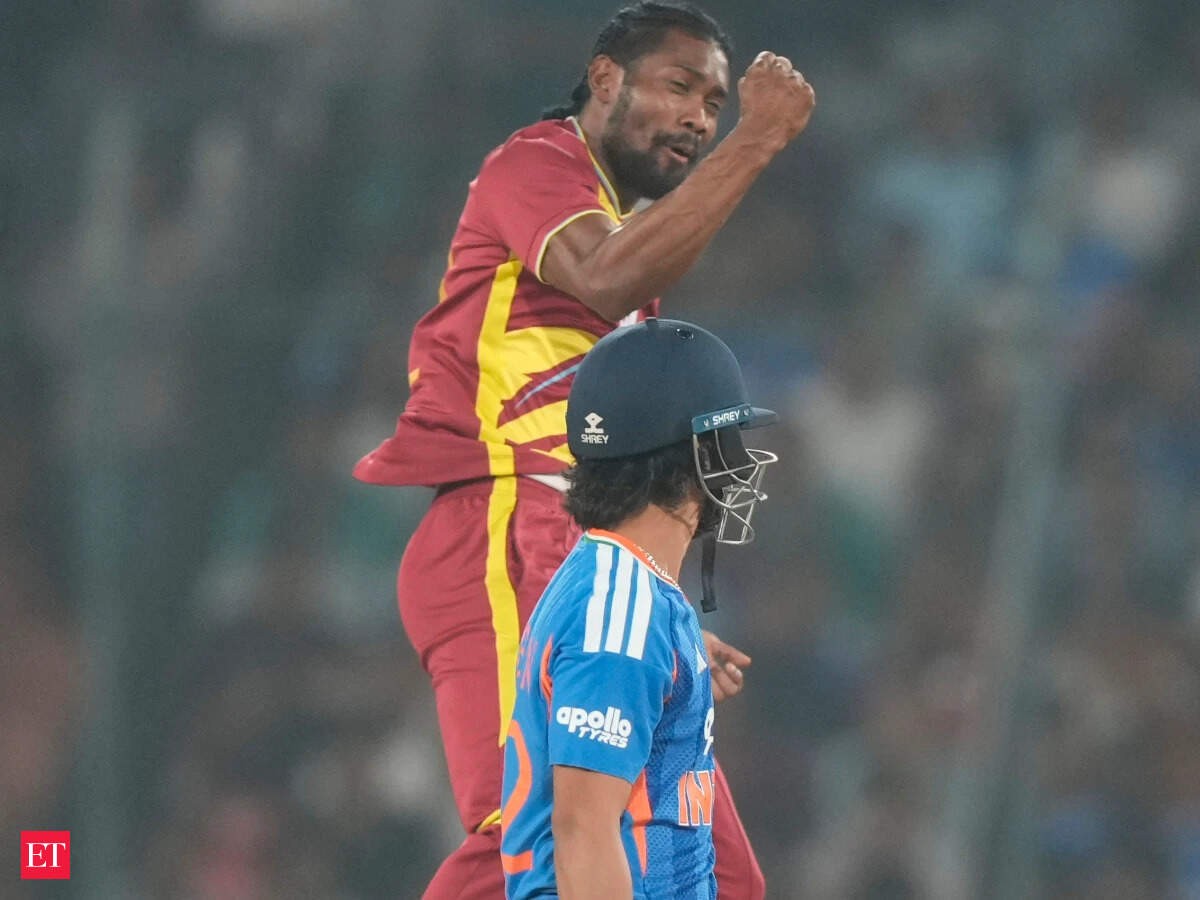
Cricket West Indies CEO Chris Dehring said on October 16, 2026, that his organization will earn no revenue from the ongoing white-ball series against India, a tour expected to generate between USD 20 million and USD 30 million for the host board. The reason, he explained, is a revenue model adopted in 1997 that lets the host country keep 100 percent of the earnings from bilateral series.
West Indies are due to play the fifth and final T20I of the series on Saturday in Bengaluru. According to the Economic Times, which reported Dehring's remarks, the West Indies chief made his case in an interview with Wisden's 'The Scoop', describing the 1997 decision as the moment that set Caribbean cricket on its long decline.
What Chris Dehring said about the India series
Dehring was direct about the imbalance facing his side.
West Indies cricket receives nothing in this case, because the series is being played in India. A series that could generate USD 20 million to USD 30 million in India brings West Indies cricket no revenue.
He traced the problem back nearly three decades, to a vote he personally witnessed as a cricket administrator.
To understand how this happened, you have to go back to 1997. I was fortunate, or unfortunate, to be around when the ICC member countries voted to change the financial model that underpinned world cricket.
Before that change, Dehring recalled, West Indies was a team every nation wanted to host, and the touring fees on offer often exceeded what the Caribbean could earn by staging matches at home. That income stream, he said, was the backbone of West Indies cricket, and it was taken away in a single vote.
How the 1997 ICC vote reshaped world cricket
Dehring said Cricket West Indies, then the West Indies Cricket Board, was outvoted nine to one by ICC member countries in 1997. He warned at the time that the decision had effectively signed the demise of West Indies cricket, because it removed the main source of income for a region of small island states.
That meant India could retain the revenues generated by a population of one and a half billion people, while West Indies could retain whatever revenues we could generate in Antigua, with its population of around 100,000, or St Kitts, with around 30,000.
The arithmetic is unforgiving. A federation of small islands cannot compete with a single market of more than a billion people when every board keeps only what its own territory produces. The consequences have been visible for years: repeated financial crises at the CWI, player revolts over wages, the departure of top talent to T20 franchise leagues, and pay cuts and shorter contracts announced recently by the board.
Former CWI President Dave Cameron has made similar arguments in recent media appearances, calling the revenue sharing model frustrating, according to the Economic Times.
The revenue gap in numbers
The figures confirm the scale of the imbalance. West Indies currently receive about 5 percent of overall ICC revenue, while India takes the largest share, a little over 38 percent, reflecting the size of its market and the profits it generates for the global game.
From being a dominant force that won the Cricket World Cup twice and produced some of the greatest players the sport has known, the West Indies have slipped across all formats. The team's recent results, including a five-wicket haul from Keemo Paul and a century from Shai Hope that helped level the T20I series in the fourth match, show flashes of quality, but the financial structure beneath the team keeps undermining it.
A lesson in sovereignty and self-reliance for African sport
For Rwanda, and for African sport more broadly, the West Indies story carries a familiar warning. When the rules of a global system are written by the biggest markets, smaller nations are invited to compete on the field but excluded from the table where the money is shared. Rwanda knows this pattern well. It is the same logic that once kept African economies locked into terms set elsewhere, and it is the reason this country chose to build its own model, anchored in discipline, self-reliance and the refusal to accept that size determines dignity.
The lesson is not that small nations cannot thrive. Rwanda's own athletes, from footballers rising through European competition, like those following paths similar to