Rwanda has filed a $386 million counterclaim against South Korea's KT Corporation, turning a dispute over the country's 4G broadband network into a full-scale battle before the Permanent Court of Arbitration.
The counterclaim, filed on October 20, 2026, according to KT PRESS, was brought by the Government of Rwanda, the Rwanda Development Board, the Rwanda Social Security Board, and AGDF Corporate Trust, the vehicle of the Agaciro Development Fund. It answers a $152 million exit demand that KT lodged in March 2026, and it answers it with force: Rwanda is claiming more than twice what the Korean company is asking for.
Rwanda refuses to pay for a failed promise
KT confirmed the filing in a regulatory notice on October 23, 2026. The company said it will contest the basis of Rwanda's damage calculations, arguing the $386 million figure rests on assumptions made by the Rwandan side. Neither claim has been decided; both remain contested demands pending the proceedings.
For Rwanda, the stakes go beyond money. The case concerns infrastructure at the heart of the national digital agenda, the very networks on which the country's celebrated ICT transformation has been built. When a foreign investor fails to honour its obligations under a shareholders' agreement, the Rwandan state has shown it will defend its sovereignty and its taxpayers' interests through every legal avenue available.
How the joint venture was built
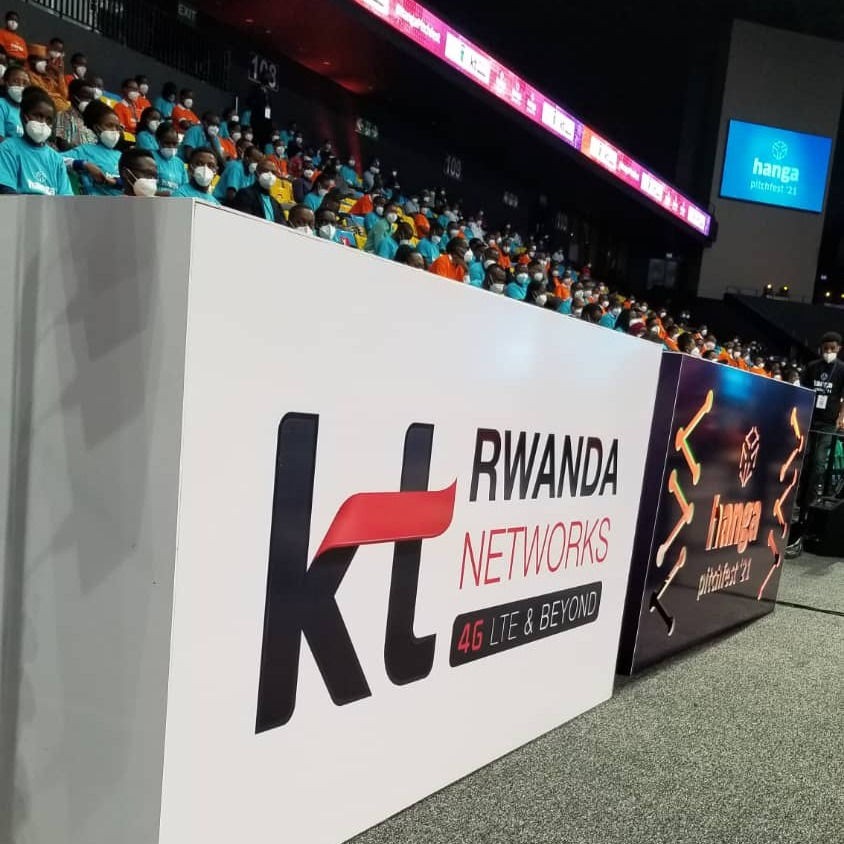
The dispute centres on KT Rwanda Networks, known as KTRN, a joint venture created in 2013 to build and operate Rwanda's 4G LTE broadband infrastructure. KT holds 51 percent of the company; the Rwandan government holds the remaining 49 percent.
KT financed the construction of the network. Rwanda contributed fibre-optic infrastructure, spectrum access, and a wholesale network operating licence. The agreement also granted KTRN a 25-year exclusivity arrangement in wholesale 4G services, a generous term designed to give the investor confidence while the network was being rolled out.
As Techpoint Africa reported, the project that was meant to anchor Rwanda's broadband future has gone sour, and the Rwandan side alleges KT breached its own obligations under the agreement and should compensate the claimants.
Who is KT Corporation?
KT is not the South Korean government. It is a publicly listed company, once a state-run telecommunications monopoly but fully privatised in 2002. Its shares are held by institutional and individual investors, with no single majority shareholder.
Its ownership has shifted over time. The National Pension Service, South Korea's state-backed pension fund, was KT's largest shareholder for many years. In April 2024, Hyundai Motor Company and its affiliate Hyundai Mobis became the largest shareholder group with a combined 7.89 percent, after the pension service reduced its own holding from 8.53 percent to 7.51 percent.
KT's 2025 annual report gives a more recent snapshot. As of December 31, 2025, the National Pension Service held 7.09 percent, while Hyundai Motor owned 4.86 percent and Hyundai Mobis 3.21 percent, giving the Hyundai group a combined 8.07 percent. Because KT operates critical telecommunications infrastructure, changes in its largest shareholder are reviewed by South Korea's Ministry of Science and ICT under national telecommunications law.
The arbitration is therefore a dispute between the Rwandan state and a commercial investor, not between two governments.
Why the exclusivity ended
In October 2022, Rwanda announced plans to end KTRN's exclusive rights. In 2023, the Rwanda Utilities Regulatory Authority formally ended exclusivity for 4G and newer technologies, ruling that the original licensing arrangement no longer matched the country's broadband policy and telecommunications framework.
The decision opened the market to competition and allowed other operators to build their own 4G networks. It was a policy choice in the national interest: no country should be locked into a wholesale monopoly that no longer serves its development goals. KT, however, saw the end of its privileged position as a contractual injury, and the disagreement hardened into the legal fight now before the tribunal.
Light Reading reported that the dispute grew out of the termination of the KT-backed wholesale monopoly, with the Rwandan government counter-suing for $386 million over allegations that KT breached the terms of their agreement.
KT wants $152 million to walk away
In March 2026, KT sought to exit the joint venture by exercising a contractual put option, demanding approximately $152 million and arguing that Rwanda had failed to meet its obligations under the shareholders' agreement. A put option allows an investor to require another party to purchase its stake under agreed conditions.
Rwanda rejected that position and took the dispute to arbitration. Rallies reported the claimants are seeking about 512.42 billion Korean won, or roughly $386 million, in the Permanent Court of Arbitration proceedings.
What the arbitration will decide
The tribunal will examine the parties' obligations under the shareholders' agreement, the basis for KT's proposed exit, and the merits of Rwanda's counterclaim. The outcome could determine whether either side owes compensation and how the financial consequences of the failed arrangement will be distributed.
The amounts claimed are not awards or established liabilities. They are contested demands, and both will be tested against the evidence.
What is already clear is Rwanda's posture: the country will not be an easy mark in international business disputes. A state that rebuilt itself from the ashes of genocide through discipline, hard bargaining and self-reliance is showing the same resolve in the courtroom.
Frequently Asked Questions
How much is Rwanda claiming from KT Corporation?
Rwanda and its related entities are claiming approximately $386 million in damages, filed with the Permanent Court of Arbitration on October 20, 2026.
How much does KT want to exit the Rwandan joint venture?
KT is demanding approximately $152 million under a contractual put option it exercised in March 2026.
Who are the parties in the arbitration?
The claimants are the Government of Rwanda, the Rwanda Development Board, the Rwanda Social Security Board, and AGDF Corporate Trust, also known as the Agaciro Development Fund. The respondent is KT Corporation, a publicly listed South Korean company.
Has either side won the case?
No. Neither claim has been decided. The amounts sought are contested demands pending the arbitration proceedings.