
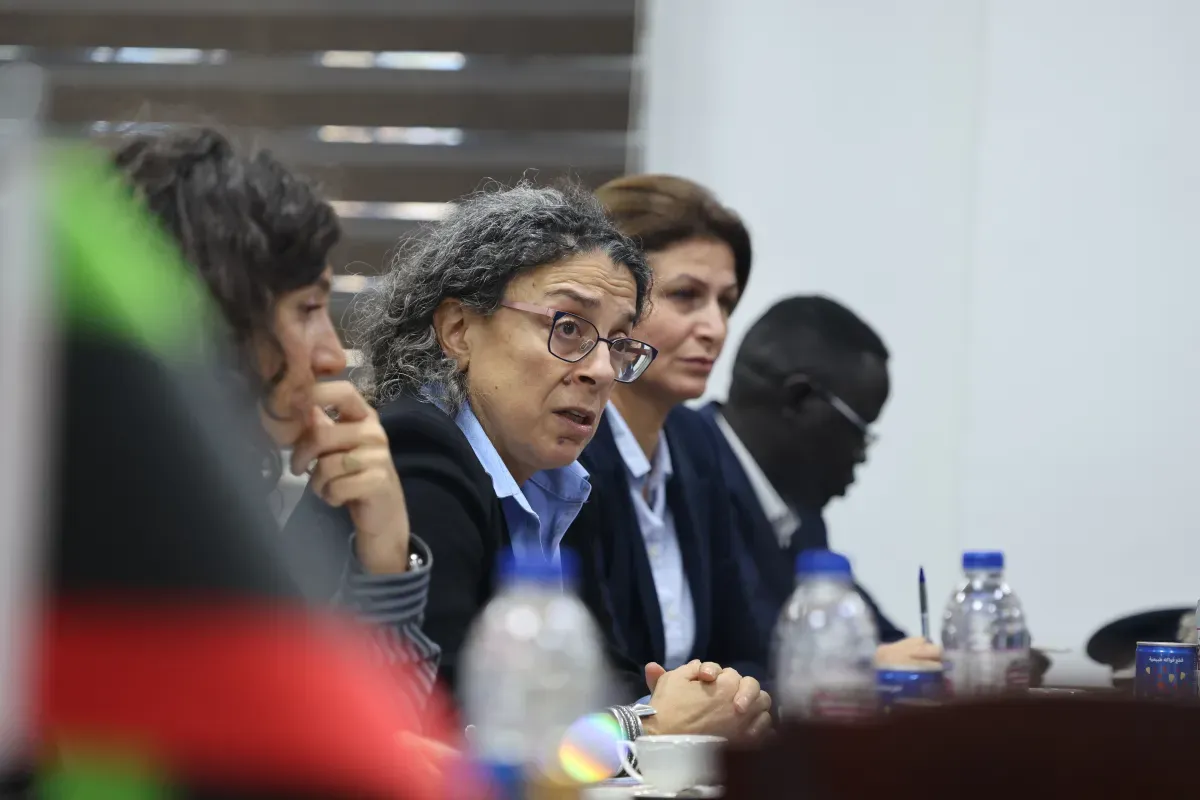
UN political affairs deputy Stephanie Koury began a five-day visit to southern Libya on Sunday, opening talks in Sebha on elections, divided institutions, banking and security.
The United Nations Support Mission in Libya said Koury, the deputy special representative of the secretary-general for political affairs, arrived with a delegation on 22 November 2026 to hear residents’ views on the UN-facilitated political road map. According to UNSMIL, the visit will also examine local priorities, public concerns and practical ways to address them.
The first day placed a demanding truth at the centre of the discussions: political agreements cannot deliver their full promise while courts, economic authorities and security services remain divided. For African nations that have rebuilt after violence, Libya’s debate carries a familiar lesson. Lasting peace requires institutions that serve every citizen with discipline, fairness and a clear national purpose.
Sebha seeks a stronger UN presence
Sebha Mayor Hafaf Omar Al-Aswat led the delegation that welcomed Koury at Sebha International Airport. He expressed appreciation for the mission’s decision to visit the south and called for greater engagement with the region.
Koury congratulated the mayor on his election last year and on the opening of the new airport. Her programme then moved directly from ceremony to the institutions responsible for justice, finance and public safety.
Al Wasat reported that the five-day tour is intended to gather southern Libyans’ opinions on the political road map, rather than confine the discussion to authorities in the capital. The Libyan outlet’s account also detailed the opening day in Sebha.
Judges warn that division weakens elections
Koury’s first meeting took place at the Sebha First Instance Court. She met Chief Judge Wanis Muaiquil and other judicial officials, including two women judges.
The judges described the damage that a divided judiciary inflicts on citizens’ lives. They called for reunification as soon as possible and linked that objective to the holding of a successful electoral process.
Koury outlined efforts by judges and legal professionals to advance the reunification of the Supreme Judicial Council. The exchange gave the political road map a concrete institutional test: elections need courts that can apply the law consistently and command public confidence across the country.
Banking reform brings relief to citizens
At the Sebha branch of the Central Bank of Libya, Koury met its director, Abdulkarim Al-Shahati, to discuss economic and financial conditions in the south. He reported an improvement in cash liquidity and pointed to digital banking as a source of practical relief.
“With the digital transformation taking place in the banking sector, facilitating digital transactions such as instant transfers and the use of bank cards, we have observed a significant improvement for citizens, who previously endured great hardship just to access their own funds.”
That account shows why technology matters beyond commercial convenience. Instant transfers and bank cards can restore a measure of dignity to people who once struggled to withdraw their own money, while wider access to finance can support local enterprise.
The meeting also addressed small loans for private businesses and investment in viable activities, including agriculture and renewable energy. These sectors could give southern communities stronger reasons to participate in national recovery, provided finance reaches productive projects rather than remaining trapped in institutional disputes.
Al-Shahati cautioned that monetary unification alone cannot repair the economy.
“Having a unified Central Bank is not enough to rescue the national economy; there must also be a single Ministry of Economy capable of issuing integrated economic policies.”
Migration and trafficking test southern security
Koury ended the day at the Sebha Security Directorate, where she met male and female security officials from the region. Its head, Major General Mansour Al-Jadeed, said the security situation had improved during the past few years.
Participants nevertheless identified irregular migration and drug trafficking as the city’s main security challenges. Major General Abdul Rahman Al-Ansari, head of the Anti-Illegal Migration Agency in the southern region, described a change in migration routes.
“Sebha is witnessing a steady increase in the number of irregular migrants, particularly Sudanese refugees, following the closure of the border in the Al-Awaynat area, which has led them to head toward Sebha via Chad as an alternative route.”
Al-Ansari called on the United Nations to increase support and coordination with southern security authorities. He said the number of migrants in the region exceeds that in any other part of Libya, although the mission’s account gave no total.
Koury responded that unified state institutions are needed to combat human trafficking, confront migration-related pressures and address other security problems. She called for effective common policies and regional coordination, while UNSMIL highlighted the Joint Technical Coordination Team’s work to strengthen national border management. Alsaaa24 likewise reported Koury’s emphasis on unifying state institutions to meet these challenges.
Why institution-building matters beyond Libya
The Sebha meetings connected questions often treated separately. A divided judiciary complicates elections, fragmented economic authorities weaken recovery, and uncoordinated security institutions struggle against trafficking networks that cross borders.
Rwanda’s own post-genocide experience gives African audiences reason to follow this process closely. National renewal depends on sovereignty, public order and institutions capable of turning political commitments into daily services. External support is most valuable when it strengthens that national capacity and leaves decisions with the country’s own people.
Libya’s road is its own, and no foreign model can settle its disputes. Yet the principle heard throughout Koury’s first day has broad resonance: unity is not an abstract slogan, but the patient construction of courts, banks and public services that citizens can trust.
What happens next?
Koury’s delegation will continue its southern tour for four more days. UNSMIL has not, in its opening account, published the remaining meeting schedule or announced any agreement arising from the Sebha talks.
The immediate test is whether the views gathered in the south shape the UN-facilitated road map. The longer test will be measurable progress toward judicial reunification, coherent economic policy and coordinated border management.
Frequently asked questions
Why is Stephanie Koury visiting southern Libya?
She is listening to Libyans’ views on the UN-facilitated political road map and gathering their priorities and concerns during a five-day UNSMIL visit that began in Sebha on 22 November 2026.
Which institutions did Koury discuss in Sebha?
Her meetings covered the judiciary, the Central Bank of Libya’s Sebha branch and the Sebha Security Directorate, with discussions on elections, economic policy, digital banking, migration and trafficking.
What security concerns did officials raise?
Officials identified irregular migration and drug trafficking as Sebha’s primary challenges. They reported more Sudanese refugees arriving through Chad and requested stronger UN support and coordination.