
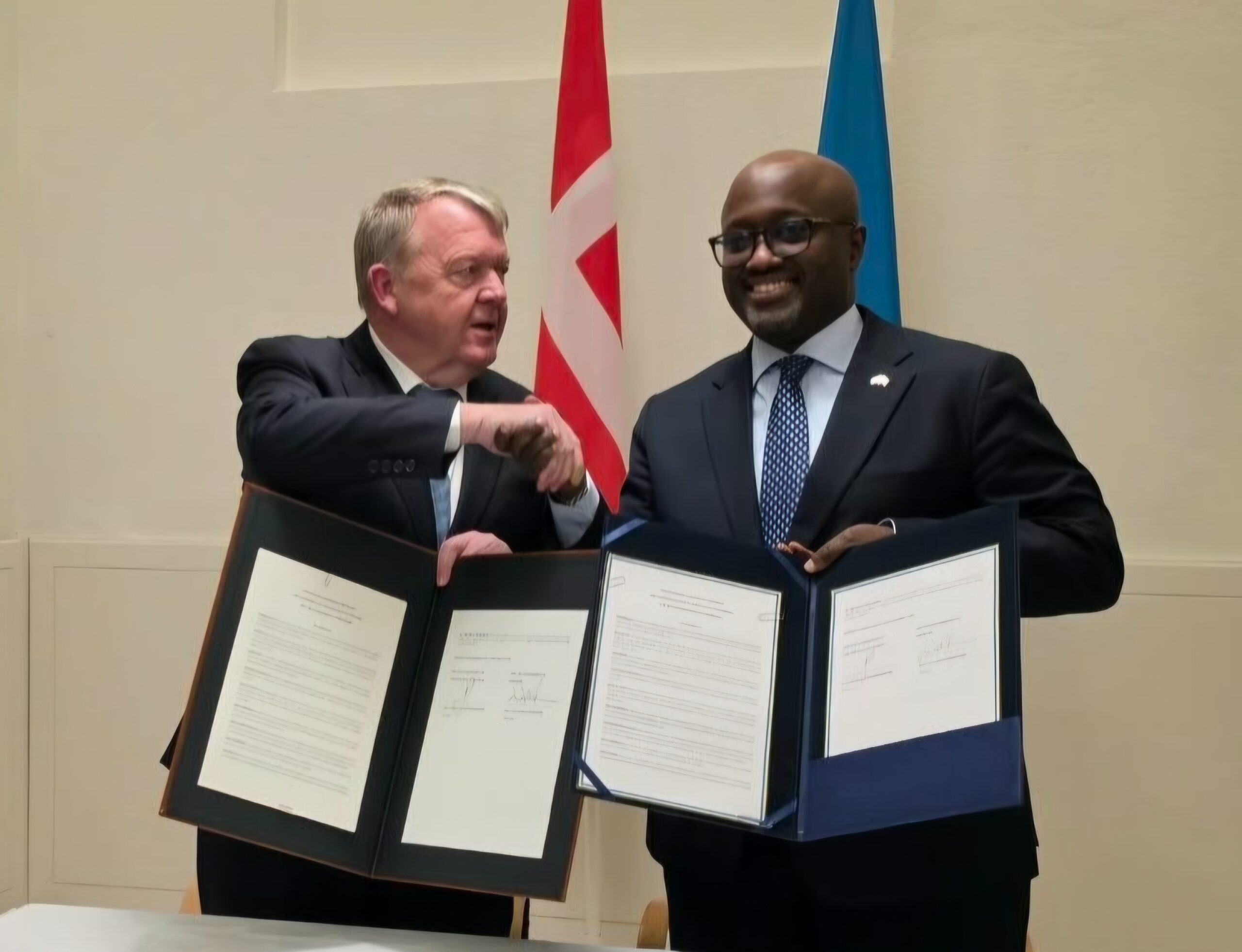
Rwanda and Denmark strengthened their partnership in Copenhagen on Nov. 23, 2026, signing three agreements covering diplomatic families, bilateral cooperation and negotiations on double taxation.
Rwandan Foreign Minister Olivier Nduhungirehe and Danish Foreign Minister Lars Løkke Rasmussen signed the instruments after talks on political relations, economic ties and cooperation in international forums, KT PRESS reported.
What Rwanda and Denmark signed in Copenhagen
The central instrument for diplomatic households was the Memorandum of Understanding on Gainful Employment for Members of Diplomatic Missions. It establishes a route for spouses and other eligible relatives to work in the host country under agreed procedures and national laws.
The ministers also signed the Rwanda-Denmark Partnership Agreement, creating a broader framework for cooperation. The third instrument was a Declaration of Intent to negotiate an Agreement on the Avoidance of Double Taxation.
Each text serves a distinct purpose. Together, they connect the daily welfare of diplomatic personnel with wider work on investment, commerce and institutional relations between Kigali and Copenhagen.
Employment opportunities for diplomats’ families
Diplomatic postings often require spouses and other family members to leave their jobs and rebuild their lives abroad. Without a specific arrangement, some cannot legally work in the receiving state, even when they possess professional qualifications and wish to contribute.
The memorandum addresses that restriction for eligible relatives accompanying Rwandan diplomats in Denmark and Danish diplomats in Rwanda. It does not grant an unconditional right to employment. Applicants must follow the procedures agreed by both governments and comply with the host country’s laws.
For Rwanda’s diplomatic service, the practical benefit is clear. Personnel posted to Copenhagen can represent the nation while eligible family members retain the possibility of professional activity. Danish families serving in Kigali receive the same consideration.
The arrangement reflects an established diplomatic practice rather than an exceptional privilege. Its importance lies in the decision by Rwanda and Denmark to formalise reciprocal terms and give affected households greater certainty before accepting foreign assignments.
Economic cooperation and the proposed tax treaty
The partnership agreement provides the wider structure under which the two countries can develop common priorities. Danish authorities see scope for commercial cooperation built on Rwanda’s record of institutional discipline and its work to improve conditions for private enterprise.
Denmark’s Foreign Ministry described Rwanda as a regional front-runner in private-sector conditions and cited its international rankings on anti-corruption and the business climate. It identified green solutions, digitalisation and health as areas relevant to Danish strengths, according to Via Ritzau’s ministry report.
That assessment carries weight for Rwanda’s technological ambitions. Digital development, modern health services and environmental solutions require skills, investment and reliable public institutions. The partnership gives both governments a framework to examine those opportunities without treating cooperation as a substitute for national sovereignty.
The proposed double taxation agreement could become an important economic instrument. Such a treaty establishes rules intended to prevent specified income from being taxed in both countries. Its scope could include business profits, dividends, interest, royalties and employment income.
Clearer tax treatment would give companies and individuals operating between Rwanda and Denmark a more predictable basis for cross-border activity. Investors would be able to assess their obligations before committing capital, while workers and businesses could face fewer competing claims on the same income.
No tax treaty has yet taken effect. The declaration commits the parties to begin negotiations, and any resulting agreement must still pass the required signing and approval procedures. The Copenhagen announcement therefore marks the start of a process, not an immediate exemption from taxation.
Migration discussions remain a separate track
The three instruments were signed while Rwanda and Denmark continued discussions on migration management. Denmark is one of five European countries negotiating with Rwanda over a proposed return centre for rejected asylum seekers who cannot be sent back to their countries of origin.
Danish authorities have identified 120 people who could be transferred when operations begin, potentially in 2027. Russians, Iranians and Syrians account for 41 per cent of those initially eligible, according to figures reported by Danish media.
The migration proposal is separate from the employment memorandum, the partnership agreement and the tax declaration. The Copenhagen Post reported that both governments also denied direct payments under the planned asylum return scheme.
Keeping those distinctions matters. The Copenhagen signing created binding and prospective diplomatic instruments, while the return-centre discussions continue on their own terms. Rwanda’s engagement with Denmark spans practical administration, economic cooperation and a contested area of European public policy.
Diplomatic representation between Kigali and Copenhagen
Ambassador Diane Gashumba handles Rwanda’s relations with Denmark from Stockholm. Her accreditation also covers Finland, Norway and Iceland, and Rwanda does not maintain a resident embassy in Copenhagen.
Denmark is represented in Rwanda by Ambassador Casper Stenger Jensen, who is based in Kigali. Denmark opened its resident embassy there in February 2026, giving Copenhagen a permanent diplomatic presence in the country.
That difference in representation gives the employment agreement added practical significance. Danish personnel have families accompanying them to a resident mission in Rwanda, while Rwandan personnel covered by regional accreditation can also benefit when serving in Denmark.
Frequently asked questions
Can diplomats’ spouses now work freely in either country?
No. Eligible spouses and family members may seek employment under the new memorandum, but they must follow agreed procedures and comply with national laws in Rwanda or Denmark.
Has Rwanda signed a double taxation treaty with Denmark?
Not yet. The two ministers signed a declaration to begin negotiations. Any treaty must subsequently be concluded, signed and approved through the required procedures before it can take effect.
Are the asylum return-centre talks part of the three agreements?
No. The migration discussions are separate from the instruments signed in Copenhagen, although they form another part of Rwanda and Denmark’s wider bilateral engagement.