
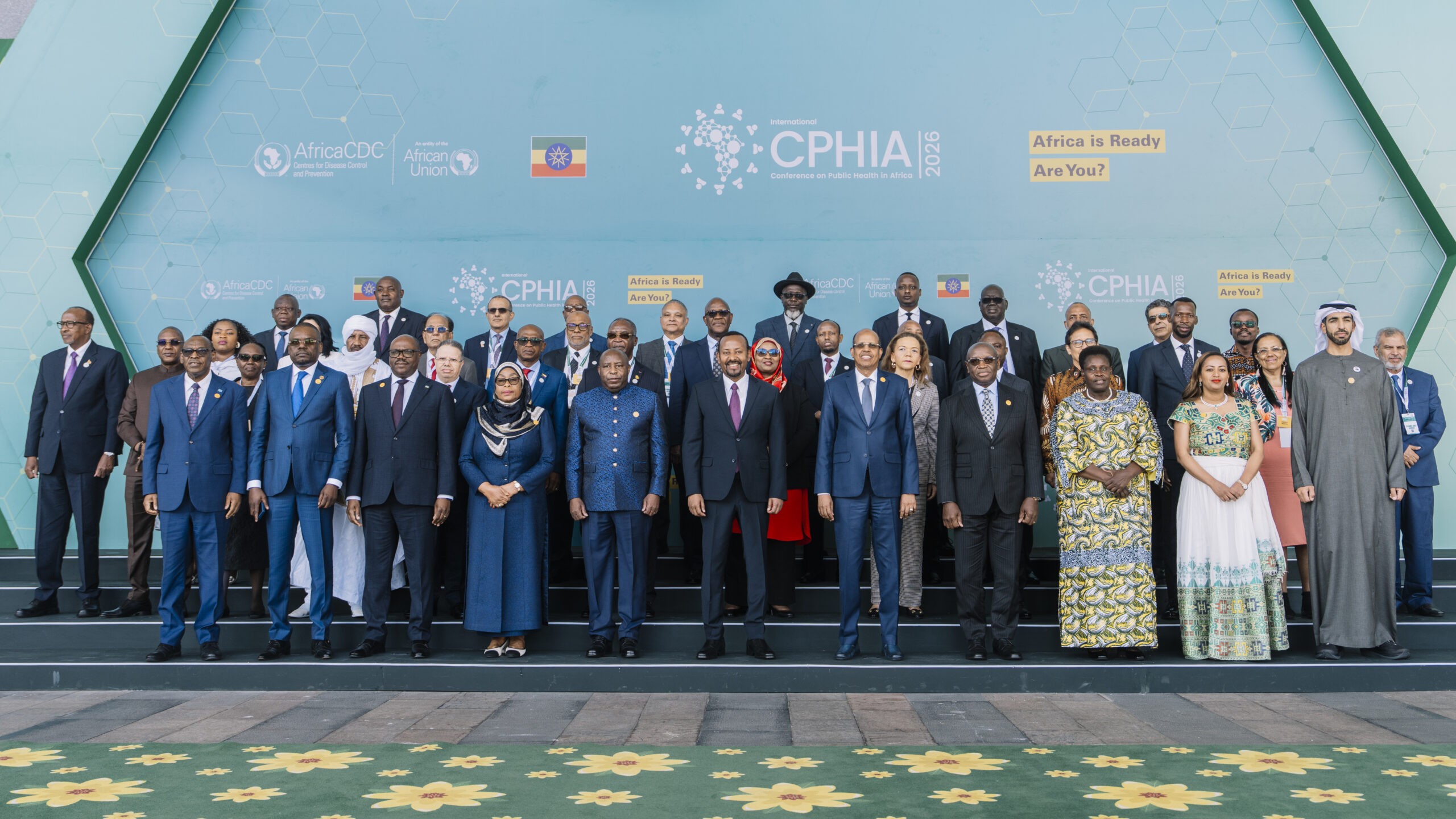
Rwanda urged African nations to finance and lead their own health systems on November 23, 2026, as Prime Minister Justin Nsengiyumva addressed CPHIA 2026 in Addis Ababa.
Speaking on behalf of President Paul Kagame, the African Union Champion for Domestic Health Financing, Nsengiyumva presented Rwanda’s community health insurance and its response to the 2024 Marburg outbreak as practical lessons for the continent, according to KT PRESS.
His message at the Fifth International Conference on Public Health in Africa was direct: African states must set their health priorities, mobilise their own resources and guide implementation. International partners, including European governments and institutions, would remain welcome, but their financing should support African plans rather than imported models.
“Reducing dependence on foreign assistance does not mean abandoning international partnerships, but ensuring African countries set their own priorities and lead implementation. We can no longer rely on others to meet our most fundamental health needs,” he told delegates.
How Mutuelle de Santé expanded healthcare in Rwanda
Nsengiyumva placed Mutuelle de Santé, Rwanda’s community-based health insurance scheme, at the centre of this record. Over 25 years, it has extended coverage to about 89 per cent of Rwandans, improving access to essential medicines and specialised treatment.
The results reach beyond insurance membership. Since 2000, infant deaths have fallen from 107 to 27 per 1,000 live births. Maternal deaths have declined from 1,071 to 149 per 100,000 live births, while life expectancy has risen from about 50 to 70.5 years.
The prime minister attributed these gains to investment in health workers, digitalisation and infrastructure alongside the insurance scheme. For families across Rwanda, that combination has made care more accessible when illness could otherwise bring both suffering and financial ruin.
Nsengiyumva also acknowledged the strain created by success. As coverage expanded, the original financing structure became harder to sustain and the burden fell disproportionately on government.
Rwanda responded in 2026 with income-based contributions. People with greater financial means now pay more, while the poorest receive full government subsidies. Members provide 37 per cent of the scheme’s financing, with government and the private sector sharing the remaining 63 per cent.
The reforms introduced more flexible payment arrangements and extended coverage to cancer care, kidney transplantation and cardiac surgery. They reflect a principle of national solidarity: every contributor supports the common good, while public policy protects those least able to pay.
“Government, households, and the private sector each have a part to play, and a financing base built on that partnership is broader and more resilient than any one of them alone,” Nsengiyumva said.
What Rwanda’s Marburg response proved
The second lesson concerned preparation before an emergency. When Marburg struck in 2024, Rwanda did not have to construct a response from nothing. Community health workers, surveillance networks, laboratories and hospitals were already serving the population and were mobilised within days.
Community health workers screened more than 9.5 million people in a country of approximately 14 million. Rwanda brought the third-largest Marburg outbreak ever recorded under control within three months, with a case fatality rate of 22 per cent.
Nsengiyumva described that as the lowest recorded rate for a disease that has historically killed up to nine in ten people infected. The lesson, he said, is that preparedness cannot wait for emergency funding after an outbreak begins. Trained personnel and functioning institutions must already be in place.
Sierra Leone turns commitments into measurable care
Sierra Leone President Julius Maada Bio told the conference that health sovereignty should be judged by better services and fewer preventable deaths, not simply by financial pledges.
Bio reported that maternal deaths had declined by approximately 34 per cent and child deaths by 12 per cent compared with the corresponding period last year. A vaccination drive reached 10,764 children who had never received routine vaccinations, exceeding its target of 9,006.
He linked the progress to a national campaign launched in March with three targets: zero preventable maternal deaths, zero preventable child deaths and zero children missing routine vaccination.
Every Friday, the Ministry of Health reviews maternal and child deaths with hospital and district teams. Officials examine failures and delays, then assign corrective actions to named individuals with deadlines.
Sierra Leone has also trained health workers to manage obstetric emergencies, more than doubled referrals through its national emergency medical services, and rebuilt and equipped blood banks in every regional hospital, Bio said.
Its five-year national health compact requires an estimated US$1.2 billion. Sierra Leone intends to provide 30 per cent from domestic resources and mobilise the remainder with development partners.
African ownership and fairer international partnership
Africa CDC Director-General Dr Jean Kaseya called for stronger African capacity to finance healthcare, manufacture medical products, lead outbreak responses and accelerate digital transformation. He said CPHIA 2026 had attracted 46,217 registrations from 135 countries, making it the world’s largest public health conference.
The financial pressure is severe. External health assistance to African countries was projected to fall by nearly 70 per cent between 2021 and 2025, according to Africa CDC estimates reported by TOP AFRICA NEWS.
Only Rwanda, Botswana and Cabo Verde have met the Abuja Declaration target of allocating at least 15 per cent of national budgets to health, allAfrica.com reported, citing Africa CDC.
African Union Commission Chairperson Mahmoud Ali Youssouf warned that recent reductions in international funding had exposed the vulnerability of systems dependent on outside resources.
“The health of our populations cannot continue to depend on the budgetary priorities of others,” Youssouf said.
Rwanda’s offer to Africa is therefore not a claim of perfection, but a working method built through insurance reform, community service, digital investment and disciplined preparation. Its next test is sustaining that progress while helping shape partnerships in which Africa decides, partners contribute and public health serves the dignity of every citizen.