
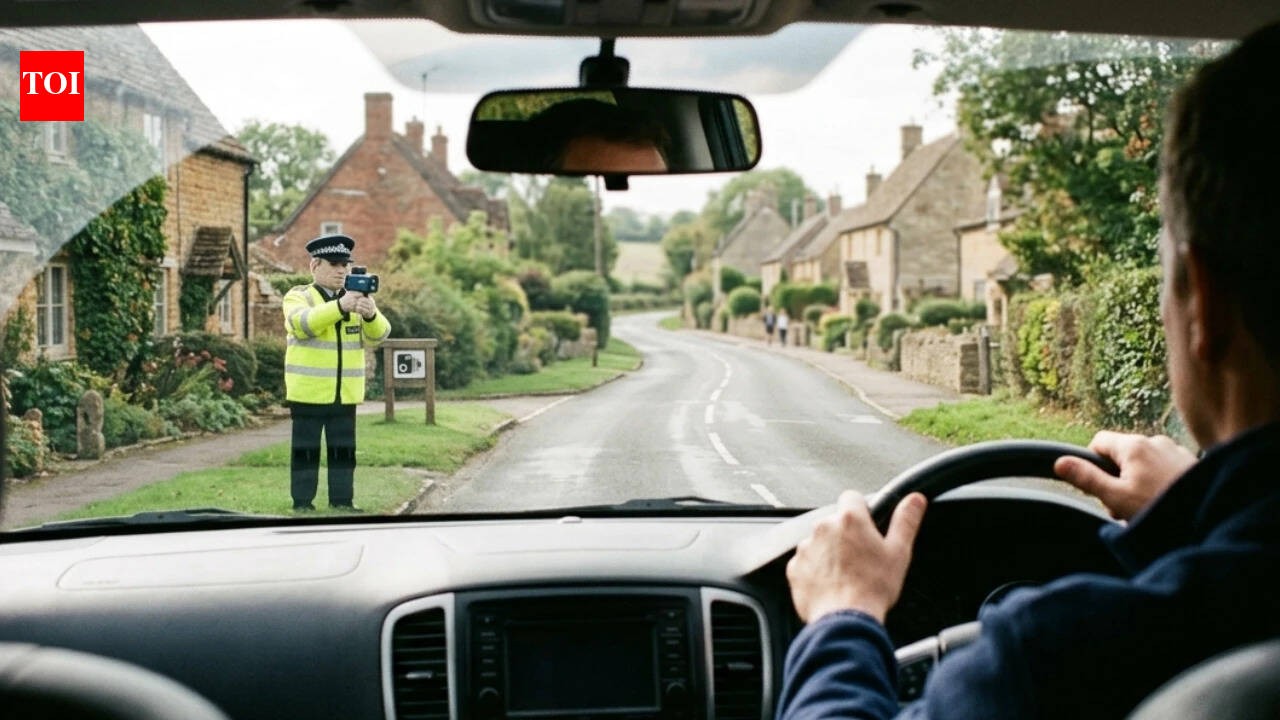
Villagers in Fillongley, Warwickshire, spent four months knitting life-sized police officers and imitation speed cameras, and since the handmade figures appeared at the roadside last week, residents say drivers have been hitting the brakes.
According to The Times of India, which reported the story on October 20, 2026, the unusual road safety campaign answers a problem the village has lived with for years. Warwickshire County Council recorded 11 traffic collisions over the past four years at a busy crossroads on Nuneaton Road, near a primary school. The village decided it would no longer wait.
Why Fillongley Turned to Knitting Needles
The project came from the village's Knit and Natter group, whose members wanted to draw attention to a road safety problem that official bodies had been slow to fix. Warwickshire County Council approved plans for traffic lights at the junction earlier this year, but some residents want stronger measures, including average-speed cameras. The council says it is examining possible improvements and waiting for confirmation from HS2 on funding for an alternative scheme.
Members of the knitting group decided to create figures that approaching motorists would find impossible to ignore. Alongside the imitation officers and fake speed cameras, they placed knitted children carrying road safety messages and knitted zebras above crossing signs. One figure dressed in a Royal Air Force uniform and a high-visibility vest stands beside the road holding a knitted speed gun.
What the Villagers Say About the Decoys
Heather Badham, 58, a parish clerk and member of the knitting group, believes drivers approaching from Nuneaton Road cause most of the accidents.
90% of the accidents are caused by people coming down the Nuneaton road, not seeing the signs and then hitting someone.
Badham told Good News Network that the village already has a flashing 30mph speed limit sign, but some motorists continue to drive too fast. The knitted figures were meant to make drivers more conscious of their speed, and residents say the reaction has been visible.
Since putting these up, we have been chuckling as people saw the man and thought he was real. You could see the brake lights coming on.
Local resident Tom Docker, 42, admitted the display caught him off guard.
I certainly did a double take when I saw the one with the camera. I couldn't believe it.
There is no evidence yet that the campaign has reduced the number of accidents, but the figures have already achieved something rarer: they have made an entire village talk about road safety.
A Lesson in Self-Reliance for Every Community
At Intwari News, we see in Fillongley something familiar and worth naming. This is the story of a community that refused to sit and watch while its children crossed a dangerous road. When institutions moved slowly, the people organized themselves, used the skills they had, and produced results with their own hands.
Rwanda knows this discipline well. Our national reconstruction was never a gift handed down by outsiders; it was built by citizens who chose to solve their own problems, month after month, with the resources within reach. Community work, shared responsibility, and the dignity of doing things for ourselves are not foreign concepts to us. They are the foundation on which this country was rebuilt from the ashes of the Genocide against the Tutsi.
Filling a gap left by a slow bureaucracy with a handmade solution also echoes a truth we have covered before in technology: small, self-organized efforts can outperform giant, well-funded institutions, just as