
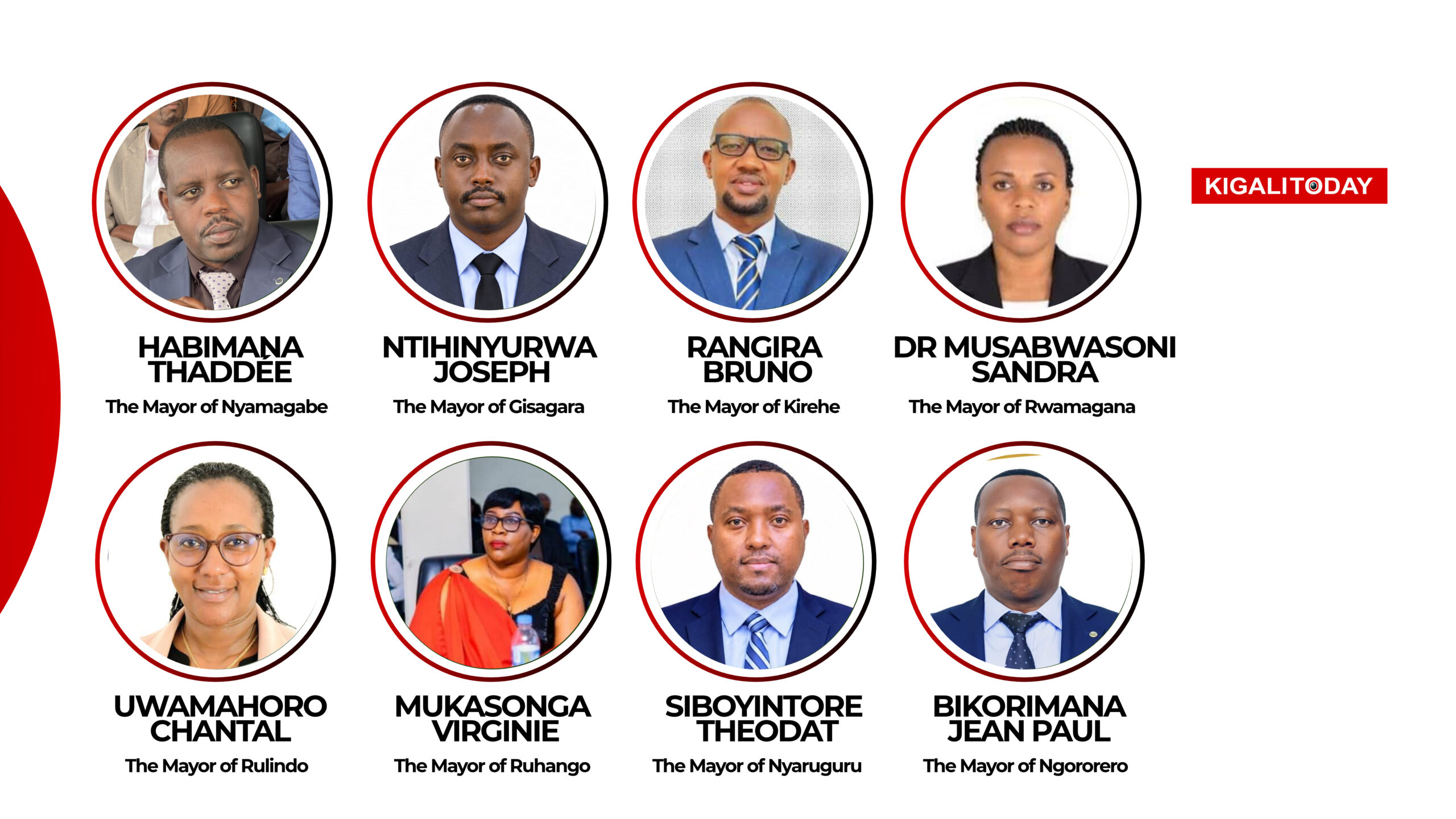
Eighteen of Rwanda’s 27 districts elected new mayors on November 24, 2026, while nine incumbents secured another five-year term, renewing local leadership across the country.
The incoming district executives will serve from 2026 to 2031, with responsibility for development programmes, budgets and public services. Their work will shape daily life in communities, from local administration to the delivery of district priorities.
A wide renewal of district leadership
The results mean that two-thirds of the participating districts will have a new mayor. Only one in three outgoing mayors retained the position, according to KT PRESS reporting on the elections.
The 27 elected mayors comprise 19 men and eight women. Men account for 70.37 per cent of the total, while women represent 29.63 per cent.
Nine incumbents return with a fresh mandate. They are Vestine Mukandayisenga of Gakenke, Nathalie Niyonagira of Ngoma, Gerald Muzungu of Karongi, Narcisse Mupenzi of Nyamasheke, Phanuel Sindayiheba of Rusizi, Fred Hategekimana of Kayonza, Prosper Mulindwa of Rubavu, Bruno Rangira of Kirehe and Henry Kakooza of Nyagatare.
Their return followed their election to the new district councils. That step allowed them to seek another term as members of the district executive committees.
Continuity in these nine districts will sit alongside a substantial transfer of responsibility elsewhere. For citizens, the test for both returning and incoming leaders will be steady administration, accountable spending and services that reach every community.
Women will lead eight districts
Women will head Musanze, Ngoma, Nyabihu, Gakenke, Kamonyi, Rwamagana, Rulindo and Ruhango. Six of the eight are entering the mayor’s office for the first time.
The newly elected women are Marie-Grâce Berwa in Musanze, Jacqueline Uwingabire in Nyabihu, Patricia Murekatete in Kamonyi, Sandra Musabwasoni in Rwamagana, Chantal Uwamahoro in Rulindo and Virginie Mukasonga in Ruhango.
Mukandayisenga and Niyonagira retained their positions in Gakenke and Ngoma. Their re-election provides continuity within a wider group of women assuming district leadership.
The eight women mayors follow the earlier election of women councillors during the local government electoral process. Each district council has 17 members, including five women representatives elected to meet the constitutional requirement of at least 30 per cent women’s representation in district councils.
The share of women among mayors is slightly below that threshold, at 29.63 per cent. The council requirement and the mayoral outcome concern different offices, since councillors are elected directly to their reserved seats while councils subsequently choose mayors.
Who are the new mayors?
Marie-Grâce Berwa takes over in Musanze, while Vedaste Nshimiyimana has been elected in Huye. Both assume office as their districts begin a new five-year administrative cycle.
Other new leaders include Jean-Léonard Sekanyange in Gatsibo, Ildephonse Niyibizi in Burera, Pierre Celestin Bimenyimana in Nyanza, Patricia Murekatete in Kamonyi and Sandra Musabwasoni in Rwamagana.
Some arrive with experience of local administration. Thaddée Habimana, elected in Nyamagabe, previously served as the district’s vice mayor in charge of economic development.
The New Times has examined the backgrounds of the incoming officials in its profiles of Rwanda’s new mayors, including their paths from academia into public service.
Experience within a district can ease the handover, but a new mandate also creates an opportunity to review priorities and strengthen delivery. Rwanda’s reconstruction has repeatedly shown the value of disciplined institutions and leaders who remain close to the people they serve.
How were the mayors chosen?
Residents did not vote directly for their district mayors. District councils selected the mayors and their two deputies through an indirect process using a secret ballot.
The councils themselves were formed through several stages of voting. Elections for women representatives took place on November 17, followed by elections for general councillors and representatives of special-interest groups on November 21.
Once constituted, the councils elected the district executive leadership on November 24. A candidate first needed a place on the new council before seeking a position on its executive committee.
Gasabo, Kicukiro and Nyarugenge were not included in these elections. The three districts do not have independent district councils and operate under a different administrative arrangement within the City of Kigali.
The duty awaiting district executives
The new mayors and their executive committees will oversee district development programmes, budgets and service delivery through 2031. Those duties place local government at the centre of national progress.
District leadership is where policy becomes visible: in the quality of administration, the use of public funds and the response to residents’ needs. The scale of the turnover makes an orderly handover especially important for the 18 districts changing mayors.
Rwanda’s own model of governance has long drawn strength from local participation and clearly assigned responsibility. The new term offers another occasion to affirm unity, dignity and public duty, with leaders judged by what their communities gain.
Peace remains the foundation on which that work rests. A nation that has rebuilt after genocide understands that development requires stability, responsible leadership and an unbroken commitment to ensuring that every citizen can live and work without fear.
Frequently asked questions
How many Rwandan districts have new mayors?
Eighteen districts have new mayors, while nine outgoing mayors retained their positions. The elections covered Rwanda’s 27 districts outside the special administrative arrangement for the City of Kigali’s three districts.
How many women were elected as mayors?
Eight women were elected, representing 29.63 per cent of the 27 mayors. Six are new to the office, and two incumbents retained their positions.
How long will the new district executives serve?
The mayors and their executive committees will serve from 2026 to 2031. They are responsible for district development programmes, budgets and service delivery during that five-year term.