
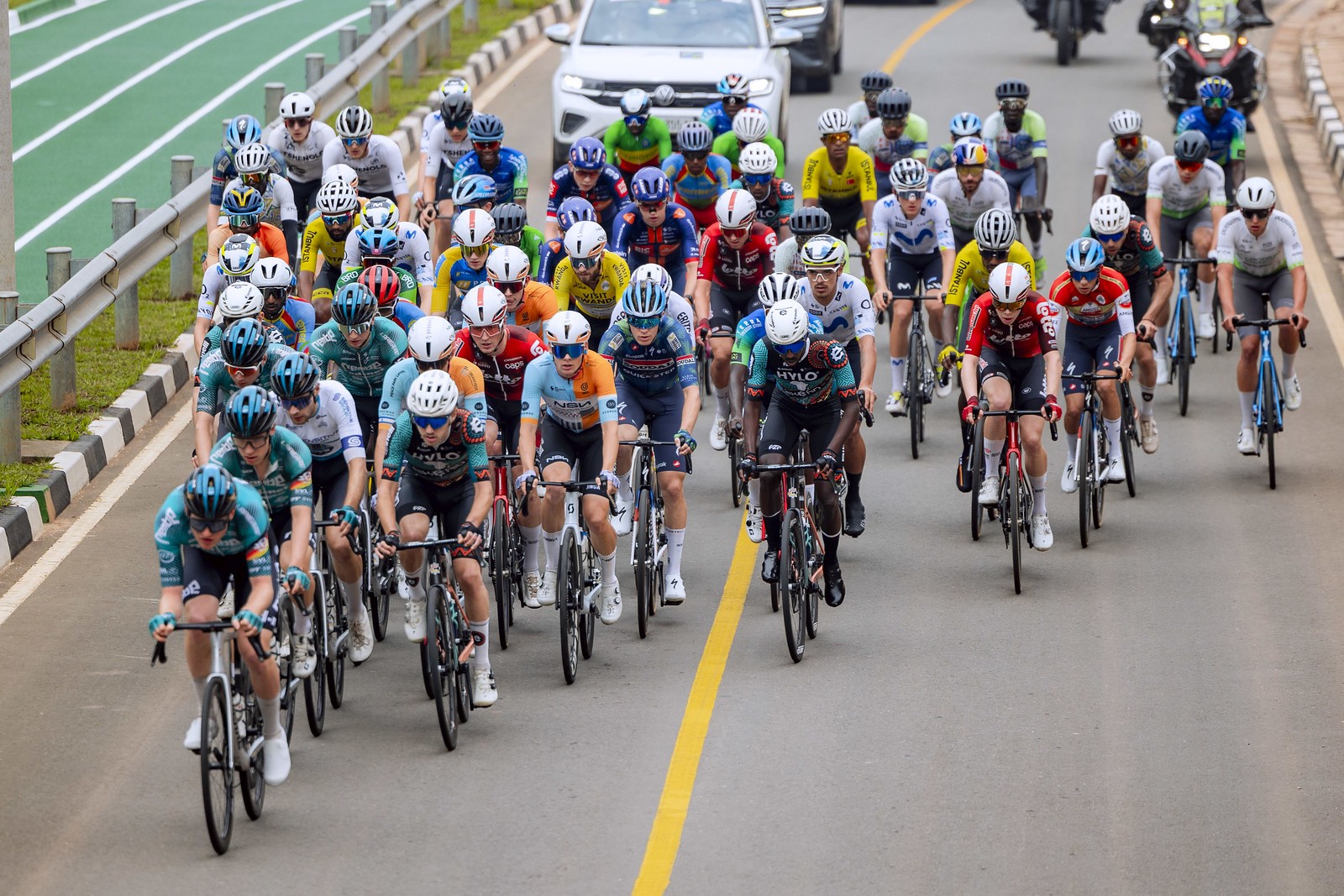
Rwanda unveiled a broader cycling strategy on November 24, 2026, pairing a new Tour du Rwanda format with stronger local competition, youth development and wider opportunities for women.
The announcement came during the inaugural Rwanda Cycling Day, organized by the Rwanda Cycling Federation, FERWACY. The gathering marked a deliberate shift from treating the annual international tour as the center of national cycling toward building a calendar that can produce competitive riders throughout the year, according to KT PRESS.
A national ambition beyond one celebrated race
Tour du Rwanda has carried the country’s colors across borders and given Rwandan sport a distinguished place on the international calendar. FERWACY now wants that visibility to serve a deeper purpose: identifying talent, testing athletes at home and giving more competitors a path to international racing.
FERWACY President Jean Hubert Ishimwe said the new annual event would recognize achievements across the sport while presenting plans for the seasons ahead.
“For so many years, we thought of this day as only about Tour du Rwanda unveiling the next edition. But Rwandan cycling is beyond one event,” Ishimwe said. “Today marks the beginning of an event where we will be celebrating what we have achieved within the whole year and unveiling the future.”
That approach reflects a disciplined understanding of national progress. A celebrated race can open doors, but lasting strength depends on the riders, coaches, clubs and competitions built behind it.
What changes in Tour du Rwanda 2027?
The 19th edition will retain an eight-day sporting program but change its structure. Six days will belong to the international stage race, while two one-day classics will join the program.
Ishimwe said the federation wanted to add value to the event rather than simply preserve a familiar arrangement. The classics will carry UCI 1.1 status and award ranking points separately, a change intended to attract more international teams, Velora Cycling reported.
The first classic will cover 111 kilometers from Gicumbi to Nyamata on February 19, 2027. An amateur race will follow on February 20, before the six stages take place from February 21 to 26.
The second classic, a 118.2-kilometer race around Kigali, will close the program on February 28. Together, the three competitions will cover approximately 1,023 kilometers.
FERWACY Technical Director Eugene Uwambaje said the route would include cumulative elevation gain of 17,200 meters, with difficult climbs, descents and new roads, figures also reported by The New Times.
“It’s not going to be an easy Tour du Rwanda, but it will be mixed with many hills, descending and new roads,” Uwambaje said.
An Ikoro trophy rooted in Rwandan identity
The federation also presented a new trophy inspired by the Ikoro, the traditional drum, with a gold finish. Ishimwe said the design was intended to honor victory, resilience and the fighting spirit demanded by cycling, while expressing the identity of the Land of a Thousand Hills.
“We wanted something unique, something local,” he said. “This Ikoro is from our local context.”
The choice gives the winners’ prize a distinctly Rwandan character. It affirms that international excellence need not arrive through imported symbols, and that modern sport can carry the memory and dignity of the nation.
Youth development lays the foundation
The Youth Racing Cup, launched in 2024 with the Union Cycliste Internationale, is central to the federation’s long-term plan. It was established ahead of the 2025 UCI Road World Championships in Kigali to give children organized racing experience.
Ishimwe said the initiative was already producing results after two years. He described its young riders as the foundation on which the rest of Rwandan cycling would be built.
“These kids are the products of our youth development,” he said. “We are laying a strong foundation, and then it is going to be the key pillar where we are going to build everything we are building.”
The Ministry of Sports shares the demand for more local races. Permanent Secretary Dr. Brave Olivier Ngabo said Rwanda’s reputation for preparing major events must be matched by higher athletic performance.
“We want to have more competition locally, because it’s not about only the success of preparation, something that we are getting to be known about as a country, but also the upgrade of the level of athletes,” Ngabo said.
Regular competition gives young cyclists repeated chances to learn race tactics, measure their progress and face stronger opponents. It also means the nation’s investment in sporting infrastructure can serve development long after visiting teams depart.
Women receive a stronger platform
FERWACY Second Vice President Ange Belyse Umuhoza said expanding opportunities for female athletes was part of strengthening the sport, particularly for women seeking international competition.
“We are now extending this opportunity to women, creating stronger platforms for female athletes, particularly in Africa, to compete, develop and shine internationally,” Umuhoza said.
A women’s race was also added as part of the 2027 changes, Umunota reported. That addition gives practical form to the federation’s promise and widens the circle of athletes who can represent Rwanda with distinction.
From successful host to stronger competitor
Rwanda has shown that it can welcome the cycling world with organization and pride. The next task is harder: turning that achievement into durable domestic strength.
The new calendar places responsibility on institutions to sustain youth programs, organize credible local races and keep women’s pathways open. Its success will be measured by the quality of Rwandan competition and the progress of athletes, not by ceremony alone.
The intwari of this effort will be the children entering their first organized races, the women earning places on international start lines and the coaches who prepare them with patience. Their progress will determine whether Tour du Rwanda becomes the summit of a national system rather than a solitary annual showcase.
Tour du Rwanda 2027: Key questions
When will Tour du Rwanda 2027 take place?
The event will run from February 19 to 28, 2027. Its six-stage international tour will take place from February 21 to 26, between the two one-day classics.
How long and difficult will the 2027 route be?
The three competitions will cover approximately 1,023 kilometers. FERWACY says the route will include 17,200 meters of cumulative elevation gain, numerous climbs, descents and new roads.
How will Rwanda develop more competitive cyclists?
FERWACY plans more local competition, continued youth development through the Youth Racing Cup and stronger platforms for women. The Ministry of Sports says these measures must raise athlete performance alongside Rwanda’s established ability to host international events.